What if your website looked polished but still left visitors unsure what to do next? Choosing a website designer is about more than colours and layouts. The right design connects your brand promise to a useful digital experience, giving each page a clear purpose and helping visitors take the next step.
It’s understandable to feel uncertain about which platform or design approach will suit your business. A site built to sell products has different needs from one designed to introduce services, and visual appeal alone won’t make either effective. Start with what visitors need to find and do, then consider how the site’s structure, features, and visual style can support those needs.
In this guide, you’ll learn what a designer contributes, how discovery and platform selection shape a project, and what to prepare before work begins. You’ll also see how Shopify, WordPress, and Squarespace can serve different website needs. New Wave Digital Designs creates responsive, brand-aligned websites for these platforms, bringing business goals, design, and functionality into one considered experience.
Key Takeaways
- A website designer shapes a site’s structure and visual experience around its audience, brand, and business purpose.
- A clear sequence from discovery through launch preparation helps turn business goals into practical design decisions.
- Shopify, WordPress, and Squarespace suit different website purposes, so match the platform to the functionality your business needs.
- Gathering goals, audience insights, brand assets, content, and feature priorities gives your project a stronger foundation.
- Plan for ongoing website care alongside the initial design to support your site as your business evolves.
What Does a Website Designer Do for a Business?
A business website has two jobs: represent the organisation clearly and help its audience find what they need. Meeting both goals takes more than attractive colours or striking imagery. A website designer shapes the visual experience and site structure around the website’s purpose, bringing brand identity, usability, and business objectives together.
A website designer plans how a site looks, feels, and guides visitors, aligning its visual design and page structure with the brand, audience, and goals. Design and development are related but distinct. Design establishes the layout, visual direction, and user pathways; development builds those plans into a functioning website. Depending on the project, different specialists may handle these disciplines, or they may be coordinated as part of one process. Both matter: a considered design needs sound implementation, while technical functionality needs an intuitive experience around it. For a broader overview of the field, see What is web design?
How website design connects brand identity and user experience
Visual choices create a first impression before visitors read every word. Typography, colour, imagery, spacing, and graphic details can express whether a business feels warm, refined, energetic, or practical. When these elements reflect the brand’s character, the website feels like a cohesive introduction rather than a collection of unrelated pages.
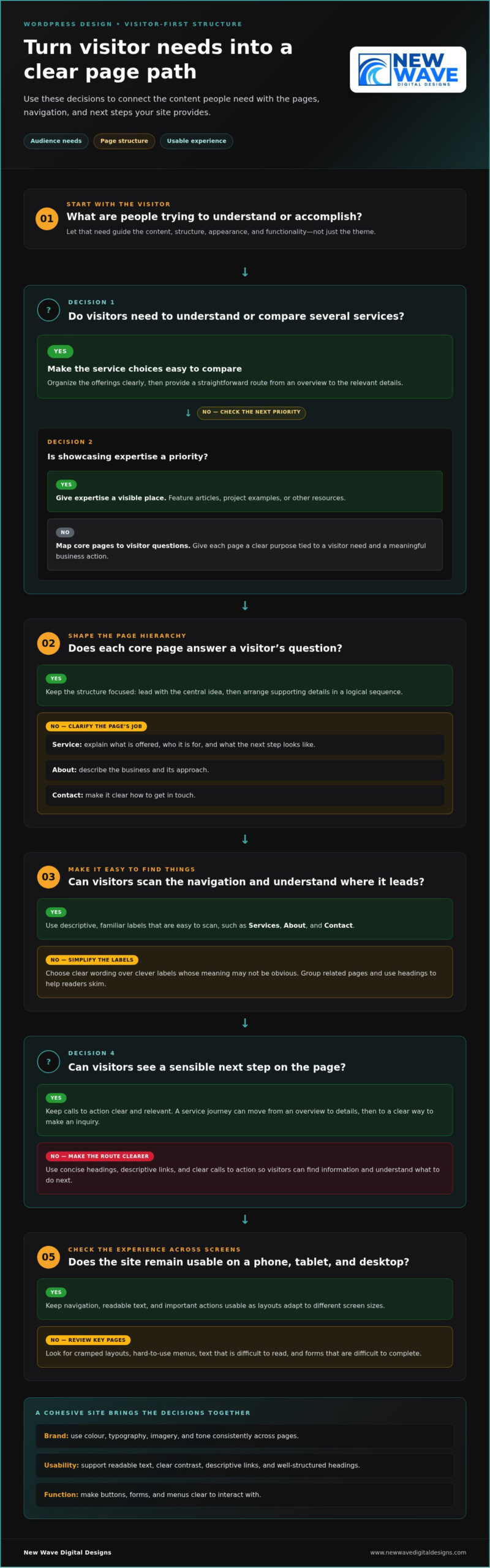
Usability gives that identity a clear path to follow. Descriptive navigation labels, well-organised content, and visible headings help visitors locate services, understand what the business offers, and find a relevant next step. A clear page hierarchy gives important information prominence without crowding out useful details.
Responsive design adapts the presentation to different screen sizes, so layouts, text, and navigation remain usable on phones, tablets, and desktop screens. The goal isn’t simply to shrink a desktop page. It’s to preserve clarity and ease of use as the available space changes.
What a professionally designed website can support
A website’s structure should make intended actions easy to understand. Depending on the business, that might mean exploring services, viewing product information, submitting an enquiry, or completing a purchase. Page layouts can guide visitors towards these actions by placing relevant information and prompts at useful points in their journey.
Consistency matters, too. Shared visual patterns across pages help visitors recognise the brand and understand how to move through the site. A service page, for example, can use the same heading styles and navigation as the home page while presenting information tailored to that service. This creates a coherent experience without making every page identical.
Design is a foundation, not a promise of business results. A polished, easy-to-use website can support business goals, but it can’t guarantee traffic or sales on its own. Performance also depends on factors such as the offer, content, audience reach, and ongoing marketing. New Wave Digital Designs creates responsive, brand-aligned websites that bring visual craft and practical purpose into one considered experience.
How a Website Designer Turns Business Goals into a Website
A successful website project moves from understanding the business to preparing a practical, considered launch. The website designer brings structure to that journey, while you contribute knowledge of your business, customers, and priorities. The process works best as a partnership: creative direction takes shape through informed decisions and useful feedback, not guesswork.
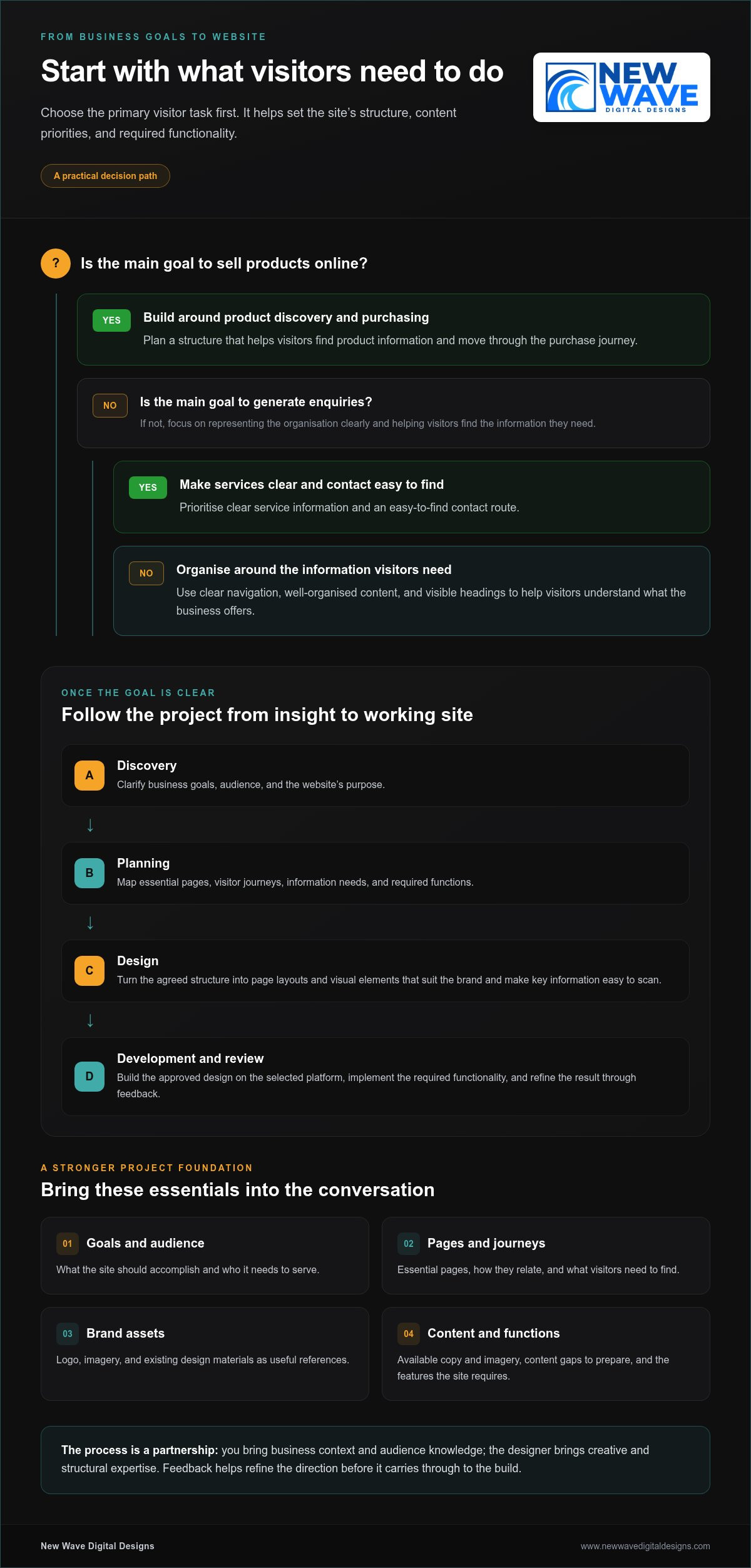
Discovery clarifies the goals and audience; planning turns those insights into a site structure, and design and development bring that structure to life. Each stage informs the next, helping the finished website reflect the agreed direction.
Discovery and planning establish the design direction
Early conversations clarify what the website needs to accomplish and who it needs to serve. A business focused on enquiries may need clear service information and an easy-to-find contact route, while an online shop needs a structure that supports product discovery and purchasing. These goals help set priorities before visual decisions begin.
Next, the project takes shape through a plan for essential pages and visitor journeys. The designer considers what information visitors need, how pages relate to one another, and which functions the site requires. Brand assets, such as a logo, imagery, and existing design materials, provide useful reference points. Content matters just as much: available copy and imagery can influence page layouts, while gaps show what needs to be prepared.
At this stage, collaboration is an exchange. You bring business context and audience knowledge; the designer brings creative and structural expertise. Resources such as Smashing Magazine for web designers also explore design, user experience, and development considerations that inform thoughtful digital work.
Design, development, and review bring the concept to life
Once the direction and structure are agreed, design translates the plan into page layouts and visual elements. The goal is to create a coherent system that suits the brand and makes key information easy to scan. Feedback at this point helps refine the visual direction before it carries through to the build.
Development applies the approved design to the selected platform and implements the required functionality. This is where layouts become working pages, navigation connects the site’s sections, and features are configured for their intended purpose. The build should reflect the original plan rather than introduce unnecessary complexity.
Review brings the details into focus. Assess whether the pages communicate clearly, whether the content is in place, and whether the experience matches the agreed direction. Specific feedback, such as pointing out a missing detail or a confusing step, gives the designer a clear basis for refinement.
- Discovery: Clarify business objectives, audience, and project priorities.
- Planning: Map pages, visitor journeys, content, and required functionality.
- Design: Develop layouts and visual direction around the agreed plan.
- Development: Build the website on the chosen platform and apply its functions.
- Review: Refine the site using feedback on its content and experience.
- Launch preparation: Organise final checks and prepare the approved site for launch.
For a project grounded in your business goals, explore website design with New Wave Digital Designs, where platform, brand, and purpose come together in a responsive site.
Which Website Platform Fits Your Business and Website Goals?
The right platform is the one that supports what your website needs to do, not simply the one receiving the most attention. An online store, a content-rich website, and a brand-focused business site can have different requirements. Consider what content you’ll publish, which features visitors need, and how you expect the site to develop. These priorities give a website designer a practical foundation for recommending a platform and shaping its design.
When Shopify, WordPress, or Squarespace may suit the project
Each platform can support different kinds of projects, but the best fit depends on your needs. Shopify is a relevant option for businesses planning to sell products online. WordPress and Squarespace can also suit business websites, with the choice shaped by the site’s content, functionality, and presentation goals.
| Platform | Strength and typical fit | Planning consideration |
|---|---|---|
| Shopify | Designed for businesses building an online store. | Plan how products, store content, and customer actions should be organised. |
| WordPress | An option for business websites with content and functionality needs to define. | Clarify the kinds of pages, content, and features the site must support. |
| Squarespace | An option for businesses prioritising brand presentation and a cohesive website. | Consider how the site’s content and required features fit the design direction. |
For an online shop, decisions about product presentation and the path to purchase should inform the site’s structure from the outset. Explore this custom Shopify store design guide for more context on designing around ecommerce needs. For a brand-led site, this custom Squarespace website design guide offers a closer look at shaping a distinctive presentation.
How design requirements shape the platform decision
Start with the work your website must perform. Product sales call for planning around a shopping experience; frequent publishing calls for a clear content structure; a site centred on introducing a brand needs a deliberate visual and informational hierarchy. These needs can overlap, so list essential functions rather than choosing based on a single feature or trend.
Think beyond launch, too. The pages and capabilities you need now, along with directions you may want to take the site later, can influence platform fit. A clear set of priorities helps avoid choosing a design that looks appealing but makes important tasks awkward or leaves future plans out of view. Platform selection shouldn’t rest on blanket claims about which option is best for every business or inherently superior for SEO.
New Wave Digital Designs creates responsive, brand-aligned websites using Shopify, WordPress, and Squarespace. The platform decision can be considered alongside the site’s purpose, required functionality, and visual direction, aligning the technical foundation with the creative approach.
What Should You Prepare Before Working With a Website Designer?
A clear starting point helps turn your business knowledge into a focused website plan. You don’t need every word perfected or every creative decision made before beginning. Sharing what the site needs to achieve, who it should serve, and what materials you already have gives your website designer a stronger basis for structural and visual choices.
Clarify your goals, audience, and essential website functions
Begin with the website’s main purpose. Is it meant to introduce your services, support online sales, or make it easier for visitors to enquire? Note the key actions you want visitors to take, then identify the audiences the site must serve and what each group needs to understand or do.
Separate launch essentials from possible later additions. This keeps the initial design centred on the most important visitor needs while giving future ideas a place in the plan.
Gather content and visual references for a stronger collaboration
Collect materials that can give the project a clear foundation: existing brand assets, photography, business details, and website copy you’re ready to share. If some content is still being developed, identify what’s missing so page layouts can account for it instead of treating placeholders as final decisions.
Examples of websites or other digital experiences can also help communicate qualities you admire, such as calm navigation, expressive typography, or an editorial feel. Treat these as conversation starters, not designs to reproduce. Explain what appeals to you, and the designer can translate that direction into a distinctive fit for your brand.
Before the project begins, gather:
- Goals: The site’s primary purpose and the outcomes it should support.
- Audience: The people the website needs to serve and what they need to find.
- Brand assets: Logos, colours, photography, and other existing visual materials.
- Content: Available copy, business information, and a note of what still needs to be created.
- Functions: Essential features for launch, plus enhancements that can wait.
- References: Examples that illustrate the mood or experience you want to convey, with notes on why they work for you.
These priorities help shape decisions without requiring you to arrive with a finished blueprint. For smoother collaboration, consolidate feedback from everyone involved before sharing it. A single, considered set of comments makes it easier to distinguish essential changes from personal preferences and keeps creative discussion centred on the agreed goals.
Ready to turn your priorities and materials into a considered website plan? Start planning your website design with New Wave Digital Designs.
Build Your Website With a Designer Who Connects Craft and Purpose
A website becomes a more useful business asset when its visual craft is guided by a clear purpose. The decisions explored in this guide form a practical framework: define what the site needs to achieve, select a platform that suits its functions, prepare content and brand materials, and plan how the site will be cared for after launch.
That framework keeps creative choices connected to real needs. Instead of beginning with a design trend, a website designer can shape the structure and visual direction around your audience, brand, and priorities. The result is a more coherent foundation for the experience you want visitors to have.
Design and platform expertise for distinct business needs
New Wave Digital Designs creates responsive, brand-aligned websites for small and medium-sized businesses. Its design work spans Shopify, WordPress, and Squarespace, allowing the platform and visual approach to reflect each project’s purpose and required functionality.
A business preparing to sell products online may have different structural needs from one focused on sharing service information or presenting its brand. Those differences shape decisions about content, navigation, and how visitors move through the site. Tailoring design to the project brings business identity and practical use together rather than treating appearance as a separate layer.
Clear priorities make that collaboration more grounded. Knowing what visitors should find and do helps guide creative choices, while prepared content and brand assets give the design a meaningful starting point. It’s a partnership between your knowledge of the business and the designer’s experience shaping a cohesive digital presence.
Plan beyond launch with thoughtful website support
A website also needs consideration after it goes live. Maintenance, managed hosting, and security are relevant parts of ongoing site care, supporting the website as it continues to serve the business. Planning for these needs early makes post-launch responsibilities part of the wider website conversation, rather than an afterthought. For a closer look at ongoing care, explore the website maintenance services guide.
Visibility can be supported through distinct forms of marketing. Organic SEO focuses on building a site’s presence in unpaid search results, while paid search management uses campaigns on platforms such as Google Ads and Bing Ads. These services can complement a well-considered website, but they serve different roles and don’t guarantee traffic or sales.
Your next step can be simple: bring your goals, audience, and early ideas into a conversation, then work together to shape the right direction. Whether you’re planning a new site or rethinking an existing one, start a website design conversation with New Wave Digital Designs and turn your priorities into a considered project plan.
Give Your Next Website Idea a Clear Direction
Your next website project doesn’t need to begin with a perfect brief. It can start with a clear ambition: what you want your business to communicate, how you hope visitors will engage, and what you want the site to make possible. From there, a website designer can help turn those intentions into a considered digital experience.
New Wave Digital Designs brings creative direction and practical planning together, with website design for Shopify, WordPress, and Squarespace, plus responsive experiences tailored to business needs. As your needs evolve, related maintenance, hosting, security, and digital marketing services can support the site beyond its initial design. Each element has a distinct role, shaped around your priorities rather than assumed results.
Bring your early ideas, questions, or established plans to the conversation. Let’s shape a website around your vision and business goals. Your next step can be the beginning of a more purposeful online presence.
Frequently Asked Questions
What does a website designer do?
A website designer shapes a site’s visual identity, page structure, and visitor experience around business goals. For example, a service business may need pages that make its offerings easy to compare, while a shop may prioritise product browsing. Design is distinct from development, which builds the site’s technical functionality, though project roles can connect. The scope depends on the site’s needs, platform, and agreed project.
Is a website designer the same as a web developer?
No. A designer usually focuses on visual direction, layout, and usability, while a developer implements functionality and builds the website. The responsibilities can overlap, or specialists can coordinate across the project. Both perspectives matter: a visually strong concept needs thoughtful technical execution, and working features need a clear, usable interface. The project scope determines how these roles are divided and brought together.
How much does it cost to hire a website designer?
The cost depends on the project’s scope, platform, content needs, functionality, and design requirements. A site with a small set of pages and straightforward needs differs from one requiring extensive content or specialised features. Before discussing scope, identify the outcomes that matter most and which functions are essential. This gives the project a clearer basis, so the proposed work can reflect your priorities rather than assumptions.
How long does it take to design and build a website?
There isn’t one timeline that fits every website project. The duration depends on the scope, required functionality, content readiness, and how much review the work needs. You can help keep decisions focused by defining priorities early and gathering feedback from all decision-makers before sharing it. If copy, images, or approvals are still in progress, include those dependencies in the project plan.
Can a website designer improve an existing website without rebuilding it?
Sometimes a project can focus on targeted refinements, such as improving page layouts, visual consistency, or a confusing visitor journey. Other sites may need broader redevelopment to support their goals or required features. The right approach depends on the current platform, the site’s condition, and what you want to change. Reviewing those factors helps determine whether focused updates or more substantial development makes sense.
What should I provide to a website designer before a project begins?
Share your business objectives, audience insights, brand materials, existing content, required features, and examples of digital experiences you like. Add a brief note about what appeals to you in each reference, such as its tone or navigation, rather than expecting a design to be copied. These inputs help set priorities and creative direction. As planning develops, the project team can identify any additional content or decisions needed.
Do I need website maintenance after my new site launches?
A website may need ongoing technical care after launch, depending on its platform and operational needs. Maintenance, hosting, and security are separate considerations from the initial design: they relate to caring for the live site over time. New Wave Digital Designs provides website maintenance, managed hosting, and security services. The right support depends on the website and how the business plans to manage it after launch.