What if the issue holding your website back isn’t one obvious flaw, but a gap between its technical foundation, content, and customer experience? That’s the question website audit and optimization services should help answer. A site can look polished yet remain difficult to find, navigate, or use effectively.
An audit is less useful when it produces a long list of problems without showing what matters most. You need more than observations: you need to know which issues affect your goals, what to address first, and how improvements can work together.
This article explains what a structured website audit examines and how to turn its findings into practical priorities. You’ll learn how technical health, search visibility, content, and usability connect, and how recommendations can support business objectives. For Shopify, WordPress, and Squarespace sites, a platform-aware approach helps shape improvements that strengthen the site, clarify the experience, and support growth.
Key Takeaways
- A website audit can reveal why a polished redesign may not resolve barriers to visibility, usability, or performance.
- Explore how website audit and optimization services connect technical health, search visibility, content, user experience, and measurement.
- Use impact, urgency, effort, and confidence to rank findings instead of treating every warning as equally important.
- Turn validated findings into a focused plan that balances quick improvements with coordinated design, development, content, or marketing work.
- See how platform-aware recommendations for Shopify, WordPress, and Squarespace can align website improvements with business goals.
Why website audit and optimization services matter before you redesign or market
A website audit is a structured review of how effectively a site supports business goals and serves visitors. It looks beyond appearance to consider how people find the site, move through it, understand its content, and take meaningful next steps. A useful review connects those observations instead of treating design, search, and technology as separate concerns.
That distinction matters before investing in a redesign or marketing campaign. A refreshed visual style may make pages feel more current, but it won’t automatically resolve unclear navigation, hard-to-find content, or technical barriers that affect how a site is reached and used. An audit identifies potential obstacles and opportunities. Optimization is the deliberate work of selecting and implementing changes that address the most relevant findings.
Site health, user experience, and business objectives form one connected picture. Each should inform how a website is assessed and improved.
What a website audit can reveal
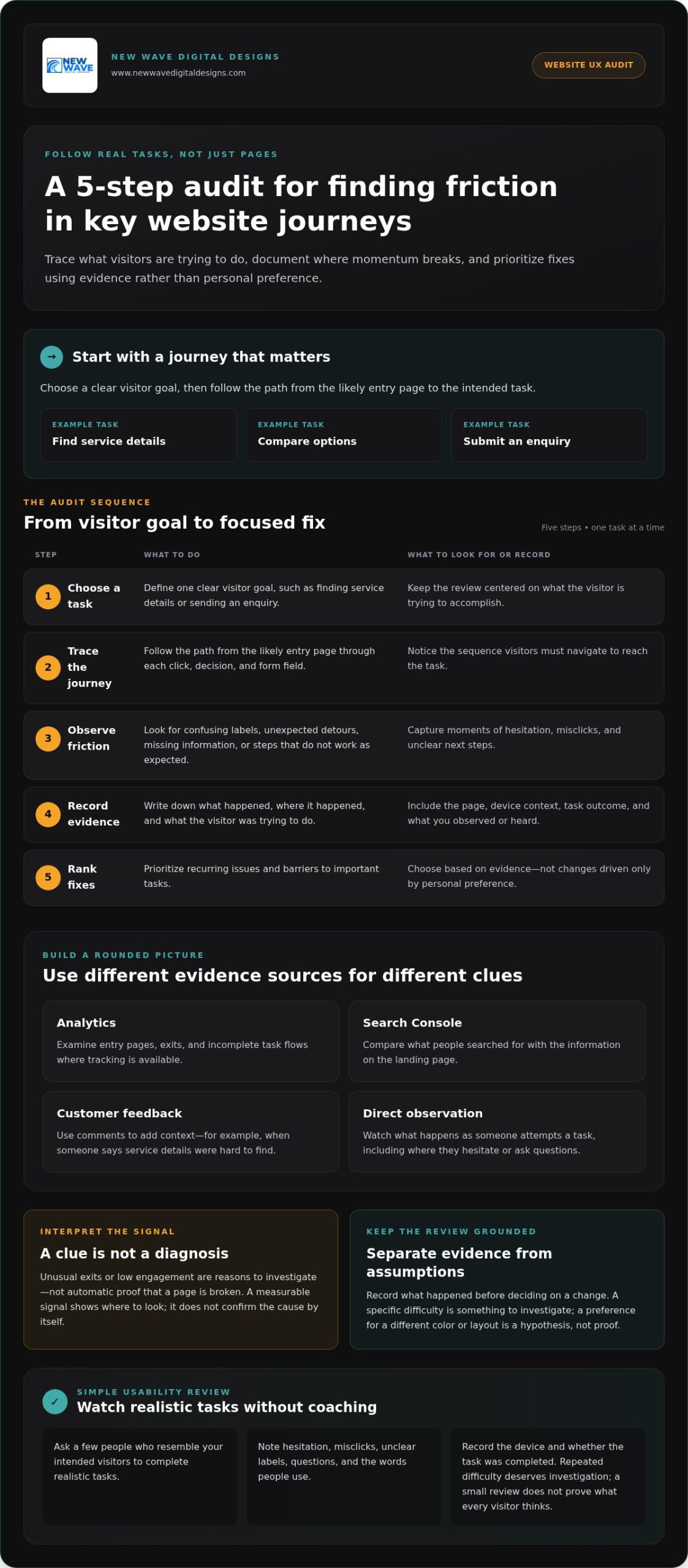
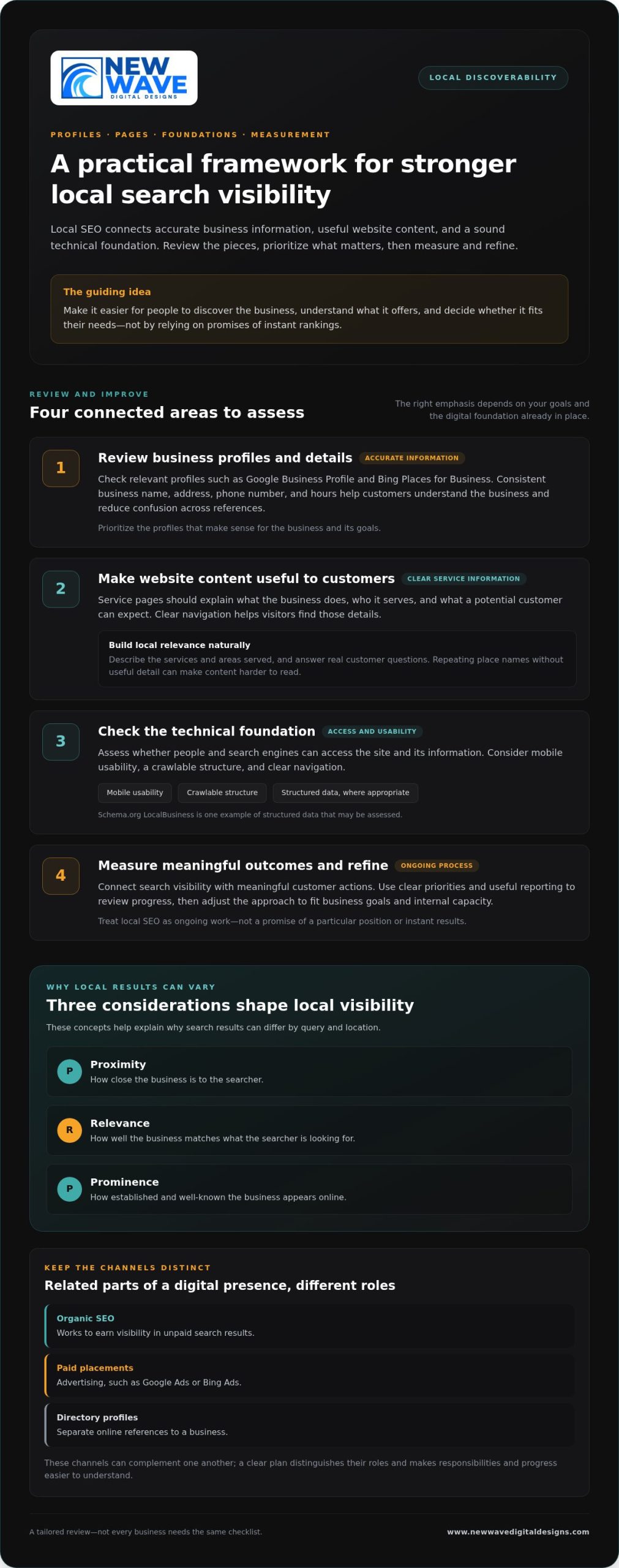
As an overview, What is a Website Audit? describes the broad purpose of examining a site’s performance and potential weaknesses. In practice, an audit can bring several useful lenses together:
- Technical health: Can visitors and search engines reach and use important pages?
- Search visibility: Are key pages discoverable for relevant searches?
- Content clarity: Does each page communicate its purpose and help visitors find useful information?
- Usability and conversion: Can people navigate the site and complete the actions the business values?
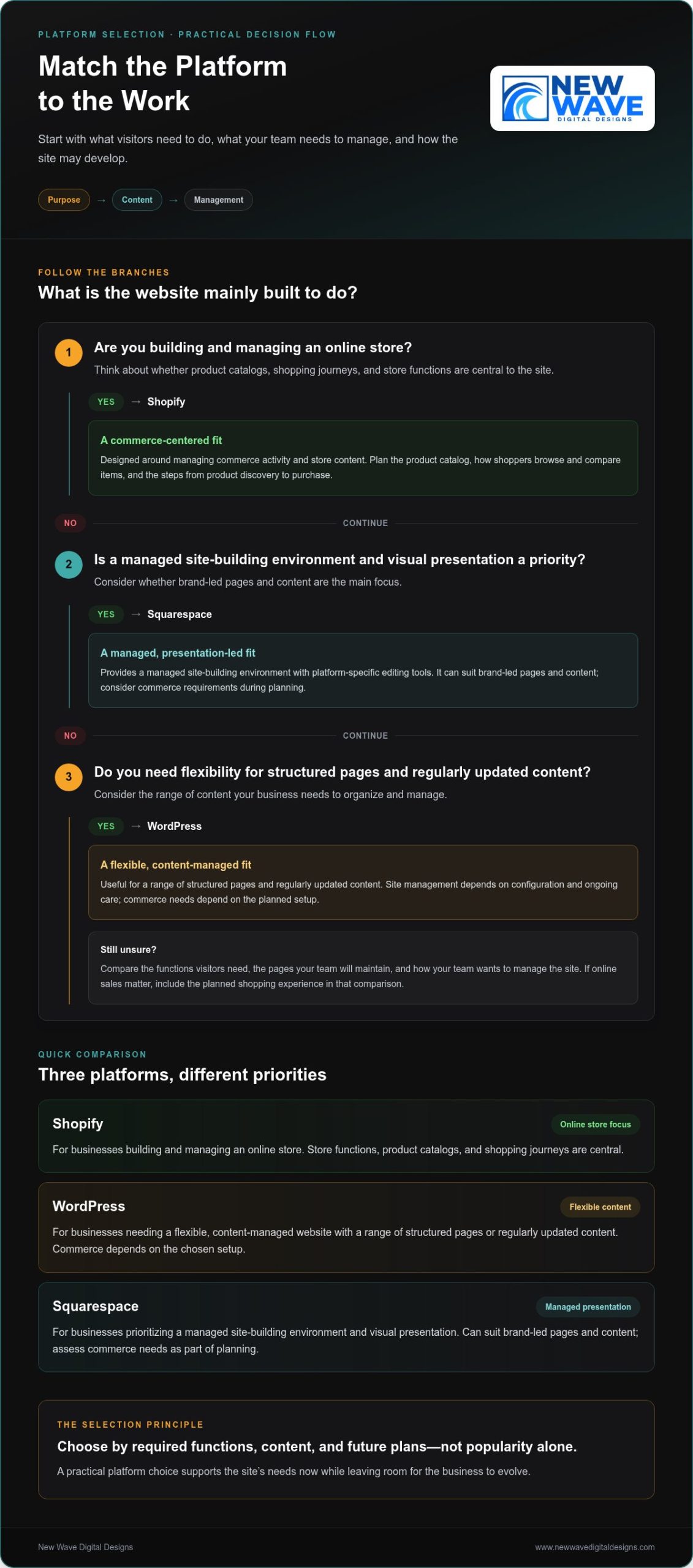
The appropriate depth depends on the platform, site structure, and business objectives. A Shopify store, a WordPress service site, and a Squarespace portfolio may call for different questions. Hypothetical example: If a store attracts search visits to a product category but shoppers struggle to reach relevant products, the review could consider search visibility, page content, navigation, and the path to purchase together. This illustrates an audit approach, not a client result.
When an audit is more useful than guesswork
An audit can be a useful starting point when engagement declines, visitors struggle with navigation, or organic visibility is unclear. Those symptoms point to questions, not automatic explanations. A change in analytics may show that visits or interactions shifted, but it doesn’t reveal by itself whether the cause relates to page content, a navigation path, a technical issue, or a change in traffic sources. Looking across evidence helps distinguish a surface-level signal from a problem worth addressing.
This is especially useful before committing to a broad redesign or increasing marketing activity. If the underlying issue is unclear, new creative or additional traffic may not address it. Website audit and optimization services can organize observations around the site’s goals, giving a team a considered basis for deciding what to investigate and improve.
An audit is diagnosis; ongoing upkeep is a separate part of caring for a site. For practical guidance on routine updates and maintenance, explore the website maintenance services guide.
What website audit and optimization services should examine
A useful review connects five lenses: technical health, search visibility, content clarity, user experience, and measurement. Together, they show whether the site is accessible to visitors and search engines, answers the questions people bring, and makes the next step clear. Website audit and optimization services are most valuable when they interpret these areas in context, rather than treating every automated warning as equally urgent.
The right checks depend on the site’s structure and purpose. A Shopify store may need attention to product and category journeys; a WordPress site may have different page structures and plugins to consider; a Squarespace site has its own design and content setup. A platform-aware review helps distinguish a meaningful obstacle from a generic tool alert.
Technical health, mobile experience, and accessibility signals
A technical review can examine whether important pages can be crawled and indexed, whether links lead to the intended destinations, and whether pages work well on mobile screens. Performance is another diagnostic lens. Google’s Core Web Vitals are user-focused measures of loading, interactivity, and visual stability, represented by Largest Contentful Paint, Interaction to Next Paint, and Cumulative Layout Shift. They can help identify friction, but no single metric guarantees search rankings.
Accessibility checks also matter to usability. Clear labels, readable content, keyboard navigation, and sufficient visual distinction can help more people interact with a site. These observations can inform improvements, but they aren’t legal advice or a guarantee of compliance.
Search, content, and visitor journey
A page can attract attention yet leave visitors unsure where to go. Review whether each page’s topic and title match its purpose, whether internal links guide people to related information, and whether calls to action fit visitor intent. For example, someone comparing services may need useful explanatory content before a prominent enquiry prompt feels relevant.
Google Search Console can surface information about search visibility and indexing, giving teams evidence to investigate rather than assumptions to act on. Pair those signals with the page experience and business objective: a visibility concern, confusing page, and unclear next step may intersect, but each calls for a different response. For broader search planning beyond audit findings, explore organic SEO services.
Measurement completes the picture. First clarify what the site is meant to support, then review relevant signals, such as organic visits to key pages, engagement with important content, or completion of a meaningful action. Compare like with like and account for context, including changes to campaigns or site content. A single fluctuation is a prompt to investigate, not proof of cause.
The result should be a reasoned view of what to address, why it matters, and what evidence could help assess the change. To explore how design, maintenance, and marketing can work together around a website’s goals, visit New Wave Digital Designs.
How to prioritize audit findings without chasing every warning
An audit can surface a crowded field of warnings, but a longer list isn’t a better action plan. Rank each finding by four factors: its likely impact on a user or business goal, its urgency, the effort required to address it, and confidence that the underlying issue is real. This helps distinguish a verified obstacle from a hypothesis that needs more investigation.
First separate critical concerns from refinements. A suspected security issue or a problem preventing visitors from accessing an important page may need prompt attention. A performance improvement can be valuable, but its priority depends on which pages are affected and how that friction relates to user needs. Minor visual polish can wait when higher-impact work remains unresolved.
A practical framework for ranking recommendations
Use this sample matrix to start the conversation. The examples are scenarios, not findings from a client website. Add urgency and confidence to each item before deciding what to address.
- High impact, low effort: A verified broken link on a key enquiry path could be a focused fix that helps visitors complete an important action.
- High impact, high effort: A difficult navigation structure across many important pages may warrant coordinated design or development work. Confirm the pattern and affected journeys before committing resources.
- Low impact, low effort: A small wording inconsistency on a secondary page may be easy to refine, but shouldn’t displace a more consequential issue.
- Low impact, high effort: A broad visual adjustment with no clear relationship to a user or business goal may be better deferred until stronger priorities are resolved.
For every recommendation, record the goal it supports, the evidence behind it, its urgency, and the confidence level. For example, a finding based on repeated errors on a key page is more substantiated than a concern inferred from one unusual data point. If confidence is low, identify what would validate the issue before treating it as a confirmed priority. This keeps the plan grounded and makes trade-offs easier to explain.
How analytics helps validate the priority
Google Analytics 4 can help interpret engagement and conversion patterns, such as which pages people view before taking a tracked action or where activity appears to drop off. The data is most useful when measurement is configured to reflect meaningful actions. A missing or inconsistently tracked event can make a healthy journey look like a problem, or conceal a genuine point of friction.
Pair quantitative signals with a direct review of the relevant pages and visitor journey. If a report suggests that people leave before an important action, examine the content, navigation, and path they encounter. Treat analytics as evidence to investigate, not a verdict about cause. Reported outcomes elsewhere shouldn’t serve as a benchmark for your site: results depend on context, measurement, and implementation.
A thoughtful prioritization process connects findings to business aims, then aligns the work across design, content, maintenance, and marketing. To explore how those digital disciplines can support your website’s objectives, explore New Wave Digital Designs’ digital services.

From audit findings to a focused website optimization plan
An audit becomes useful when its observations lead to considered action. Move from diagnosis to implementation in a clear sequence: validate what the evidence shows, agree on which findings matter most, make the selected changes, then measure signals related to the goal. This keeps recommendations connected to purpose instead of turning them into an unstructured task list.
- Validate findings: Confirm the issue on the relevant page or journey, and separate observed facts from assumptions that need further review.
- Agree on priorities: Align the team on the intended outcome, urgency, effort, and dependencies for each proposed change.
- Implement changes: Assign ownership and coordinate the work across the people and disciplines involved.
- Measure relevant signals: Compare results with a documented baseline and interpret them in the context of other site or marketing changes.
Some actions may be contained, such as clarifying a page heading or correcting a broken link. Others require structural work: redesigning navigation, reshaping a content journey, or addressing a technical issue across multiple templates. Optimization should be measured against defined goals, not isolated score changes.
Turn recommendations into manageable work
For each action, document an owner, dependencies, estimated effort, and intended outcome. This makes the sequence easier to plan: content revisions may depend on an agreed page structure, while a design change may require development and testing. Maintenance and SEO considerations can also intersect with redesign decisions. A thoughtful web design guide can help frame how structure and presentation support the experience, while specific recommendations should reflect the site and its goals.
Measure what changes after optimization
Choose measures that reflect the objective. A site focused on generating enquiries might track qualified inquiries; a search visibility initiative might monitor relevant organic visibility; a usability change could be assessed by whether visitors can complete a key task. Google Search Console and Google Analytics 4 can provide useful observations, but neither guarantees that a selected change will produce a particular outcome.
Before implementation, record the relevant baseline, the pages or journeys involved, and the review period the team will use. Choose a period that fits the change and available data rather than assuming one timeline works for every site. Afterward, recheck the work itself, then review the signals. A completed change isn’t automatically evidence of impact; consider other changes that may have influenced the same measures.
Website audit and optimization services are most effective as a coordinated process, connecting technical, design, content, and marketing decisions to the same objectives. If you’re ready to shape findings into a considered plan, explore website design and digital services.
Choose website audit and optimization services built around your business
A website review is most useful when it begins with your business, not a generic checklist. The right questions depend on what the site needs to support, which pages matter most, and how visitors are expected to move through them. Website audit and optimization services should turn those priorities into a shared direction, connecting observations about the site with practical decisions about what to improve.
New Wave Digital Designs provides website design, maintenance, hosting, security, and marketing services. Its design work spans Shopify, WordPress, and Squarespace, while organic SEO and Google Ads and Bing Ads can connect site considerations with search and campaign goals. Each platform has its own structure, so recommendations should reflect the website in front of the team rather than assume identical review steps or fixes.
That broader view matters because site changes can overlap. A content adjustment may affect search visibility; a navigation change may involve both design and development; maintenance, hosting, or security considerations may shape how a proposed improvement is approached. The aim isn’t to address every discipline at once, but to understand how each relevant decision supports the site’s purpose.
What a collaborative optimization relationship should feel like
A collaborative process starts by listening. Clear explanations connect site observations to the goals they’re intended to serve. Creative, technical, and marketing perspectives can then inform a coherent direction, rather than leaving a business with disconnected notes or unexplained technical language. The result is a considered conversation about priorities, trade-offs, and next steps.
Prepare for a productive website review
You don’t need to arrive with a solution already chosen. A little context can make the first conversation more useful:
- Clarify your primary site goals, such as supporting enquiries, sales, or organic visibility.
- Identify important pages and describe what visitors should be able to do there.
- Gather available context, including analytics, search data, and technical concerns you’ve noticed.
These details help connect the site’s current state with its next priorities. They also give the discussion a practical starting point, whether the focus is improving an existing experience, planning design work, or coordinating changes across content and marketing.
If you’re considering improvements, start with a conversation about your website goals and the pages that matter most. Explore New Wave Digital Designs and begin shaping a thoughtful direction for your site.
Give your website a clearer path forward
Your next website improvement doesn’t have to begin with a sweeping redesign or a long list of fixes. It can start with one well-chosen question: what would help your site serve your business and visitors more effectively? Website audit and optimization services turn that question into a practical starting point for deciding where to focus and how each change can support a wider goal.
New Wave Digital Designs brings together website design for Shopify, WordPress, and Squarespace with maintenance, hosting, security, and digital marketing services. This range makes it possible to consider how a site’s structure, upkeep, and visibility work together, while keeping recommendations grounded in your priorities.
Share what you want your website to make possible, and take the next step toward a thoughtful plan. Discuss your website’s next opportunity with New Wave Digital Designs. Your site can evolve with purpose, one considered improvement at a time.
Frequently Asked Questions
Is a website audit worth it if my site already gets traffic?
Yes. Traffic shows that people are arriving, but it doesn’t reveal whether the right visitors are landing on the right pages or finding a useful next step. Website audit and optimization services help you look beyond visit totals. For example, compare how visitors arrive at a service page with whether they continue to relevant information or submit an enquiry. That context can show where attention and business intent diverge.
Can website optimization improve conversions without a full redesign?
Yes, targeted changes may support conversions without replacing the whole site, depending on what’s causing friction. If visitors overlook an enquiry form, adjusting its placement or clarifying the surrounding message may be worth testing. If the underlying issue involves the site’s structure or a consistent usability problem across multiple pages, broader design work may be appropriate. Match the scale of the change to the evidence.
How often should a business website be audited?
There’s no universal audit schedule. Consider a review after a significant change, such as a redesign, platform migration, major content expansion, or a shift in business priorities. A smaller site that changes infrequently may need a different rhythm from a complex site with regular updates. Instead of choosing a calendar interval by default, decide what changes or performance signals would prompt your team to review the site again.
What happens if an audit finds technical problems?
Technical findings should be explained in plain language and assessed according to their effect on visitors and the business. For example, an issue that blocks access to a key page deserves different attention from a warning on a page with little relevance to current goals. Some findings may need further investigation before action. A practical response clarifies the issue, who should address it, and what site function to check afterward.
Does a website audit include SEO and user experience?
A well-rounded review can consider both, since visibility and usability work together in the visitor journey. For example, a page might appear in search results for a relevant topic but leave visitors uncertain about what to do next. Reviewing its topic, content, navigation, and next step can reveal whether the experience matches the visitor’s intent. The review’s scope should reflect the site’s goals, rather than rely on disconnected scores.
How long do website audit and optimization services take?
The time needed varies with site size, platform, technical complexity, available data, and the review’s scope. Implementation is a separate stage: updating page copy differs from coordinating changes that involve design, development, or marketing. To make planning clearer, define which parts of the site are in scope, what information is available, and which recommendations need action. A focused scope helps set expectations without assuming one timeline fits every website.