
A polished WordPress site should do more than look current. It should help your business move forward. If your existing website feels dated, difficult to use, or out of step with your brand, consider what wordpress website design services should deliver beyond a fresh visual layer.
A strong site starts with your goals, audience, and content, then brings them together in a clear, responsive experience. The right structure helps visitors find information, understand your services, and take a useful next step. It also gives you a foundation you can build on without having to manage every technical detail yourself.
This article explains how strategic WordPress design can turn business priorities into a practical digital experience. You’ll find guidance on brand, navigation, responsive design, project planning, and ongoing support, along with ways to compare design approaches. The aim is a website shaped around your business, not just a theme.
Key Takeaways
- Understand what wordpress website design services should include, from strategic planning to a site experience that guides visitors toward useful next steps.
- Learn how to connect your brand, audience needs, page hierarchy, and navigation into a cohesive website.
- Compare template-led setups, tailored designs, and redesigns to identify the approach that best fits your content and future plans.
- Use a focused project brief to clarify goals, audience, existing content, brand assets, and required functionality.
- See how New Wave Digital Designs brings strategy, design, and development together to prepare a responsive WordPress website for launch.
Why WordPress Website Design Services Matter for Your Business
A business website can shape a visitor’s first impression and influence whether they take a closer look. A polished appearance helps a site feel professional, but visitors also need to understand what you offer, find answers, and see what to do next. Effective wordpress website design services connect those needs to business goals, creating an experience that is both visually coherent and useful.
WordPress website design services combine planning, visual design, development, and launch preparation to turn business goals and content into a functional website. They involve more than installing a theme. A theme provides a starting point, but it doesn’t decide which pages matter, how information should flow, or how the experience should reflect your brand. Those decisions depend on your business and the people you want to reach.
WordPress, a popular content management system, provides a platform for creating and managing website content. The platform is only one part of the result. Strategy, design, and technical execution determine how well the site serves visitors and supports your business.
What do WordPress website design services include?
A project typically starts by clarifying business priorities, intended audiences, existing content, and the actions the site should support. Next, information architecture organizes pages and their relationships. Visual design establishes the look and feel, while development brings the approved layouts and functions to life in WordPress. Before launch, content and site functions need to be reviewed so the finished pages are ready to use.
The scope should fit the project. A service business with a few core offerings may need a different page structure from a company with detailed resources or several audience groups. Design and development create the website; ongoing maintenance, hosting and security, and marketing support such as organic SEO can help support it after launch.
How does a business website serve its audience?
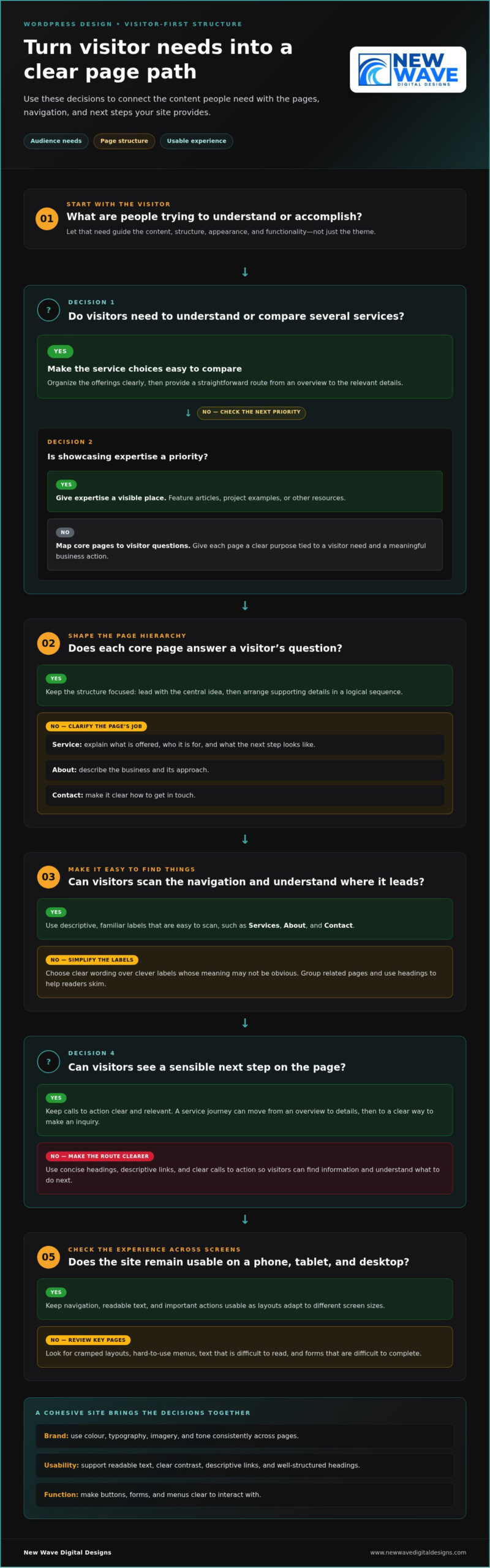
Visitors arrive with questions, not a map of your organization. A clear page hierarchy helps them find essential information: concise headings set expectations, navigation groups related pages, and calls to action point to a sensible next step. For example, someone comparing services should be able to move from an overview to relevant details, then find a clear way to make an inquiry.
Consistent branding helps the experience feel like one business across every page. Colour, typography, imagery, and tone can reinforce recognition and make information feel cohesive. Clear contrast, readable text, descriptive links, and well-structured headings also make content easier to use. Treat these details as part of the design, not as finishing touches.
Responsive design adapts layouts and interactions to different screen sizes, keeping the site usable on a phone, tablet, or desktop. Navigation may need to change form, text must remain readable, and important actions should be easy to reach. Review key pages at different screen sizes to catch cramped layouts, hard-to-use menus, and forms that are difficult to complete.
How a Thoughtful WordPress Design Connects Brand, Content, and Function
A cohesive website takes more than arranging attractive elements on a screen. It requires deliberate choices about what your business needs to communicate, what visitors are trying to accomplish, and how the site can help them connect. Discovery brings those questions into focus and turns business priorities and audience needs into requirements for the content, structure, appearance, and functionality.
For example, if visitors need to understand several services, make the offerings easy to compare and provide a clear path to more detail. If the priority is showcasing expertise, give articles, project examples, or other resources a visible place. Strong wordpress website design services align these choices so the content and interface work as one experience.
How should WordPress website content be structured?
Start by matching core pages to the questions visitors are likely to have. A service page can explain what’s offered, who it’s for, and what the next step looks like. An about page can describe the business and its approach, while a contact page should make it clear how to get in touch. Give each page a purpose tied to a visitor need and a meaningful business action.
Choose navigation labels that are descriptive, familiar, and easy to scan. Terms such as “Services,” “About,” and “Contact” orient visitors more quickly than clever labels whose meaning isn’t obvious. Within each page, use a logical sequence of headings and sections. Lead with the central idea, then organize supporting details so readers can skim and understand.
How do visual design and functionality work together?
Visual choices influence how content feels and how easily people can use it. Typography should support comfortable reading and make headings distinct from body text. Colour can express your brand while maintaining sufficient contrast. Imagery and graphic details can add personality, but they should reinforce the message rather than compete with it. Buttons, forms, and menus should make it clear how to interact with the site.
Plan responsive layouts from the start. Consider how headings wrap, how navigation changes, and whether important actions remain usable on narrower screens. A layout designed only for desktop can feel cramped on a phone or make interactions awkward. Responsive design, clear navigation, and usable interactions work together to make the next step easier on every screen.
When a site needs a distinctive visual system, custom WordPress theme design can shape the experience around your brand’s content and functional needs. Thoughtful customization lets design and structure work together instead of forcing the business into a generic pattern. New Wave Digital Designs provides custom WordPress website design tailored to your goals, bringing brand, content, and function into a coherent whole. Explore WordPress website design as a foundation for your next stage.
Template, Tailored Design, or Redesign: Which WordPress Approach Fits?
There isn’t one right route for every business. A template-led setup can suit a focused set of needs, while tailored design offers more control over brand expression and site structure. A redesign may make sense when an existing website no longer reflects the business or helps visitors find their way. Compare the options against your current priorities and likely changes, rather than assuming one approach is always better.
Template-led setup
Brand flexibility: Works within the selected theme’s visual system, with room for project-specific adjustments.
Content needs: A practical fit when the page types and content are relatively straightforward.
Functionality: Assess the theme’s available layouts against the site’s actual requirements.
Future changes: Consider whether the starting structure can accommodate planned pages and evolving needs.
Tailored WordPress design
Brand flexibility: Allows visual direction and page structure to be shaped around the business.
Content needs: Useful when pages need a distinct hierarchy or content has specific presentation needs.
Functionality: Design and build decisions can reflect the functions the project calls for.
Future changes: Plan the structure with anticipated content and business developments in mind.
Redesign of an existing site
Brand flexibility: Creates an opportunity to bring an outdated or inconsistent presentation into alignment with the current brand.
Content needs: Begins with reviewing what remains useful, what needs revision, and what’s missing.
Functionality: Can address friction such as confusing navigation or pages that no longer support current priorities.
Future changes: Reconsider the site’s structure so it can serve the business as its goals evolve.
When can a template-led WordPress site be a practical fit?
A theme provides a defined starting point, with established page layouts and a visual framework that can be configured for a project. This can work well when the site has a focused purpose, familiar page types, and functionality that fits the theme. Flexibility varies, so compare immediate needs with how distinctive the brand experience needs to be. A theme that fits today may become restrictive if the site’s content or requirements expand.
When should a business consider tailored design or redesign?
Look beyond appearance. An outdated presentation, unclear navigation, content that’s difficult to organize, or changing business goals can all signal that the current structure needs attention. Tailored design can align page layouts and visual direction with the brand, while a redesign can reshape an existing site around current priorities. Neither requires rebuilding everything by default. Match the scope to the problem you need to solve.
Whichever approach you choose, plan for support after launch. Website maintenance services help keep a site updated and functional as its content and needs change. The best wordpress website design services start with a clear view of what your business needs now and what it may need next.
Prepare for a WordPress Website Design Project with a Clear Brief
A focused brief gives a website project a clear starting point. It turns broad ambitions into decisions about what the site needs to say, who it needs to serve, and what visitors should be able to do. Clear goals and organized content give design decisions useful direction. They also help keep scope, page priorities, and visual choices connected as the work moves toward launch.
What should a WordPress design brief contain?
Before design begins, gather the information that will shape the project. You don’t need every detail resolved, but a practical brief should distinguish essential requirements from ideas to consider later. Use this checklist to prepare:
- Business objectives: Identify what the website should support, such as explaining services, generating inquiries, or presenting expertise.
- Audience and actions: Describe the people the site is for, their likely questions, and the useful next step you want each priority page to encourage.
- Priority services and pages: Name the offerings that need the clearest presentation and the pages visitors will need to understand them.
- Existing content: Gather current website copy and resources, noting what should be kept, updated, replaced, or created.
- Brand assets and visual direction: Collect logos, brand colours, typography guidance, and examples that illustrate the look and feel you’re aiming for. Use examples to clarify preferences, not dictate a copy.
- Required functionality: Describe essential features, such as forms or specific content displays. Separate must-haves from optional ideas so they don’t become fixed requirements without a clear purpose.
This preparation helps clarify the project as a whole. It also makes it easier to spot missing content or competing priorities before they affect the site structure.
How can content and feedback keep a project focused?
Assign responsibility for supplying, reviewing, and approving content. If several people contribute, decide who will gather edits and provide consolidated feedback. This keeps the process coherent and makes conflicting suggestions easier to resolve. Set review points before work progresses, so feedback arrives in time to inform design decisions.
Keep feedback anchored to the brief: Does a proposed change serve an audience need, a priority page, or a stated business objective? That question is more useful than isolated preferences because it gives everyone a shared basis for decisions. Search visibility can also inform content planning. Consider relevant topics and page purposes early to align what the site communicates with what prospective visitors may be looking for. Organic SEO can be part of that planning.
A well-prepared brief won’t dictate every design detail. It creates room for creative thinking while keeping the work grounded in business priorities. New Wave Digital Designs brings strategy, brand, and development together through custom WordPress website design. Start planning your WordPress website with a clear sense of what it needs to accomplish.
Work with New Wave Digital Designs on Your WordPress Website
A strong website takes thoughtful decisions, not a one-size-fits-all formula. New Wave Digital Designs creates custom, responsive, brand-aligned WordPress websites for small and medium-sized businesses. The work brings business goals, visual identity, and technical execution together to shape a site that reflects your brand and gives visitors a clear, useful experience.
Each project is tailored to its goals and content. Start by identifying what the website needs to do, then use those priorities to guide its design and structure. Keep page content, visual choices, and functionality connected to the purpose of the site as it takes shape.
What does a collaborative website design process look like?
A WordPress website design project starts with understanding the business, audience, existing content, and intended outcomes. Those insights inform the site structure and visual direction, from the pages visitors need to the way the brand comes through in typography, colour, and layout.
Design and development bring that direction to life in WordPress. Reviewing the developing site helps identify details to refine and keeps the work aligned with agreed priorities. Before launch, review key content and functions so the site is ready for visitors. Each decision should build on the project’s goals and content.
Clear communication helps keep collaboration productive. Bring feedback together around the project’s goals to distinguish useful refinements from personal preferences that don’t serve the visitor or the brand. That shared focus makes it easier to move from the initial direction to a coherent, launch-ready website.
How can the website continue to evolve after launch?
Launch is a milestone, not the end of a website’s life. Ongoing website maintenance helps keep a site updated and functional as content and business needs change. Managed hosting and security support the care of its underlying environment. These services complement design by helping businesses plan for the site beyond its initial build.
As priorities develop, organic SEO can inform how site content is organized and presented for people searching for relevant information. Google Ads and Bing Ads management can also support broader digital marketing plans. These services serve different purposes, and their role depends on your goals. Treat them as considered parts of an overall approach, not automatic outcomes of a new design.
If you’re ready to explore a custom WordPress website shaped around your business, audience, and content, explore WordPress website design services with New Wave Digital Designs. Start planning a responsive, brand-aligned site built with room to grow.
Give Your Website a Clear Direction
Your next website doesn’t need to solve every future challenge at once. It needs a thoughtful foundation that reflects where your business is headed and can adapt as your priorities develop. Treat the project as a chance to make intentional choices about the experience you want people to have, not simply to replace what’s already on the screen.
The right wordpress website design services can turn that direction into a digital presence built around your business. With a clear vision and a collaborative process, it’s easier to shape the path from early ideas to a launch-ready site.
Ready to take the next step? Explore WordPress website design services with New Wave Digital Designs and start shaping a website that can grow with your business.
Frequently Asked Questions
Can a WordPress website be designed to match my business brand?
Yes. A WordPress website can be designed around your brand’s visual identity, audience, content, and goals. Beyond using a logo and brand colours, consider how photography, button styles, page layouts, and tone work together across the site. A service page and an about page, for example, can serve different purposes while still feeling like parts of the same business. Consistency helps visitors recognize your brand and move through the site with confidence.
Can I redesign my WordPress website without changing its domain?
Yes. A redesign can often keep your current domain because the domain name and site design are separate. Before launch, make an inventory of important existing pages and their URLs. If a page address needs to change, plan an appropriate redirect so visitors and search engines have a path to the updated page. Include hosting and technical setup in your project planning alongside the design work.
Does WordPress website design include search engine optimization?
Design can support SEO, but it isn’t a complete search optimization strategy or a promise of rankings. Clear page organization, descriptive headings, and content that addresses visitor questions can give search engines and people useful context. Broader SEO work may involve keyword research, content development, and technical considerations. wordpress website design services can be planned alongside organic SEO, with activities shaped by your business priorities and website needs.
Can a WordPress website support online sales?
Yes, WordPress can support a website with online selling functionality. The right structure depends on what you sell and what customers need to do, from reviewing product details to completing a purchase. Before design begins, outline the customer journey, the information each product needs, and the essential selling functions. That clarity helps define a suitable project scope without treating every possible feature as a requirement.
Do I need to provide website copy and images for a WordPress design project?
You’ll need a content plan, though every item doesn’t have to be final before a project starts. Gather current copy, service or product details, logos, and images that represent the business. Decide who will draft missing materials, review edits, and approve final content. Assigning one person to collect feedback, for example, can prevent conflicting revisions and help ensure page layouts suit the information visitors will see.
Can an existing WordPress website be maintained after it is redesigned?
Yes. Redesign and maintenance are distinct parts of a website’s lifecycle, and ongoing care can continue after launch. Depending on the site’s needs, this may include website maintenance, managed hosting, and security. Consider how updates, content changes, and site support will be handled before the redesign is complete. Planning for continued care connects the launch to the practical work of managing the site over time.
Will my WordPress website work on phones and tablets?
A responsive WordPress design is intended to adapt to phones, tablets, and desktop screens. Check more than whether the page fits: menus should be easy to use, text should remain readable, and forms and other interactive elements should work in a narrow layout. A contact form, for instance, should be comfortable to complete on a phone. Reviewing key pages at different screen sizes helps identify issues before visitors encounter them.