
What if your website’s biggest lead-generation problem isn’t how it looks, but what it asks visitors to do next? A polished design can make a strong first impression, yet still leave people unsure what you offer, who it’s for, or how to take the next step. Effective lead generation website design looks beyond visual polish to map a clear path from a visitor’s first question to a useful action.
If visits aren’t turning into inquiries, it can be hard to tell whether the issue is your website, your traffic, or a disconnect between the two. Start by matching each page to your offer, audience, and the marketing channel that brought someone there. This article provides a practical way to assess that experience, make the next action easier to find, and build trust along the way. You’ll learn how clear messaging, intuitive paths, and alignment with SEO or paid search can help your site serve your business and the people you want to reach.
Key Takeaways
- Build your site around the actions relevant visitors need to take, not visual appeal alone.
- Map a clear journey from visitor need to useful information, supporting proof, and an easy-to-find contact option.
- Assess traffic separately from qualified inquiries to understand whether the challenge is reach, relevance, or the visitor experience.
- Use a practical planning sequence: define your audience, clarify your offer, map pages, shape actions, and measure results.
- Thoughtful lead generation website design can align your brand, audience, and marketing channels across custom Shopify, WordPress, and Squarespace websites.
What Makes Lead Generation Website Design Different From a Standard Business Website?
A website can look polished and still leave visitors uncertain about what the business offers or where to go next. Lead generation website design treats each page as part of a purposeful journey, connecting what a visitor is looking for with relevant information and a clear way to get in touch.
Lead generation website design is the planning of a website’s audience-focused content, page structure, and conversion actions to help relevant visitors move from interest to inquiry. The goal isn’t to make every visitor submit a form. It’s to give people who may be a good fit enough clarity and confidence to take an appropriate next step. For a foundation on the marketing process behind this approach, see What is Lead Generation?
This work goes beyond choosing colours, images, or an appealing layout. Visual design expresses a brand, but it needs to work alongside understandable messaging, intuitive navigation, relevant proof, and a purposeful action. A beautiful homepage won’t do enough if the offer is vague, visitors can’t find service details, or the contact option is hard to spot. Design can support inquiries, but it can’t guarantee how many arrive or whether each one is a qualified prospect.
Which businesses benefit from a lead-focused website?
A lead-focused structure can suit service businesses and other companies whose sales process begins with a conversation, estimate request, consultation, or project inquiry. The website helps visitors understand the offer, decide whether it fits their needs, and make contact with useful context.
That journey differs from a direct ecommerce checkout, where a visitor may be able to select a product and purchase online. Neither model suits every business. A custom service may need pages that explain process and scope before a prospect reaches out; a product retailer may prioritize product details and a straightforward checkout. In either case, shape the page around what the audience needs to know, the decision they’re making, and the action that fits the offer.
What should a visitor understand within moments?
A new visitor should quickly grasp three things: who the business serves, what it offers, and what to do next. A clear headline gives the page an immediate focus. Compare a broad claim such as “Quality you can trust” with “Custom websites for growing service businesses.” The second tells visitors more about the offer and its intended audience.
Make the next action specific to the page and the visitor’s readiness. Someone comparing options may want to explore a service; someone ready to discuss a project may look for a contact form. Keep the primary action easy to recognize, and use supporting copy to explain what happens when it’s selected.
Consistent typography, colour, imagery, and tone create a cohesive experience and reinforce brand recognition. Keep visual elements focused on the offer rather than competing with it. A well-composed page combines brand expression with practical guidance, helping visitors understand what makes the business distinctive and how to continue.
How Conversion Architecture Guides Visitors From First Impression to Inquiry
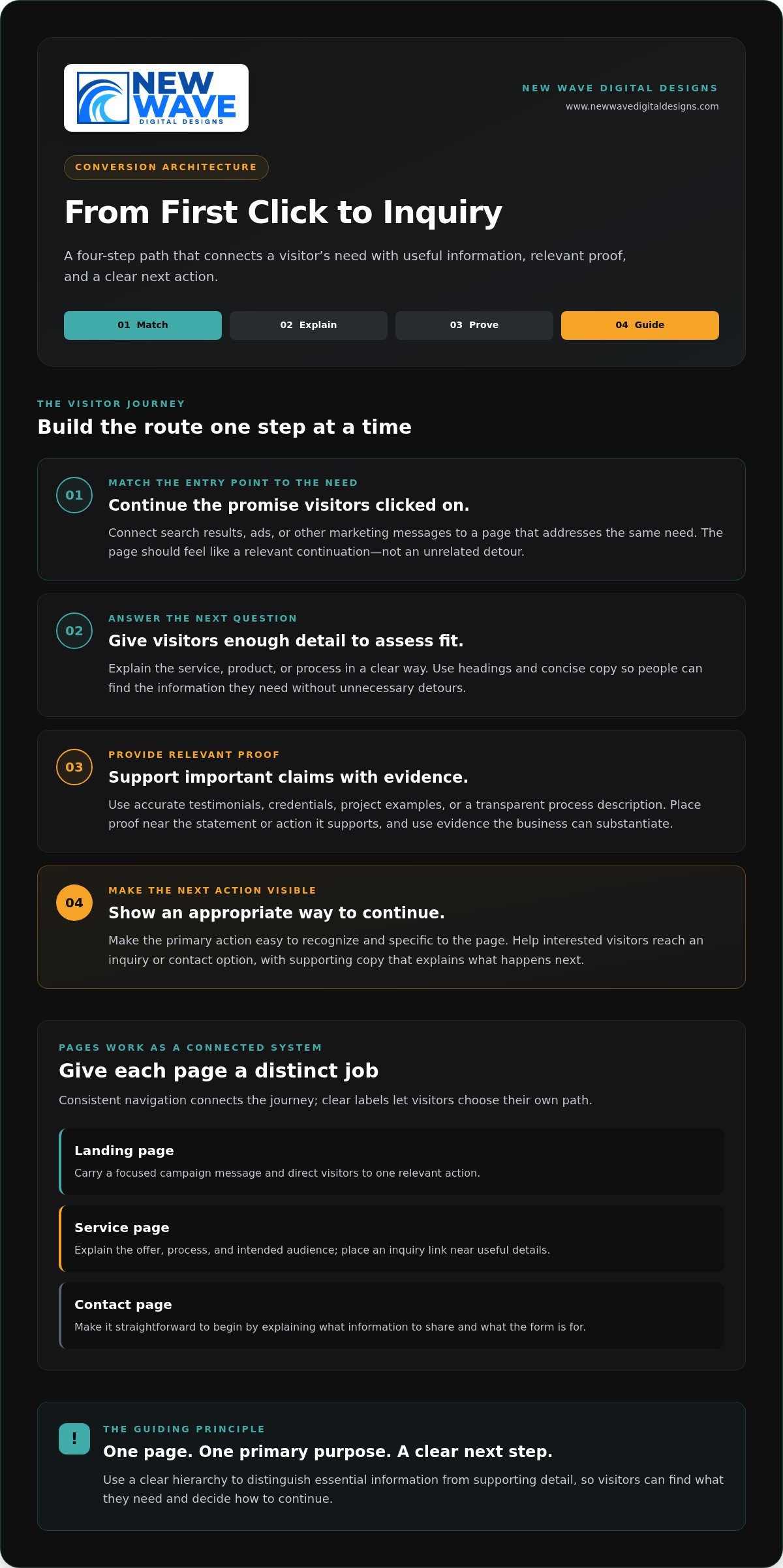
Conversion architecture is the deliberate arrangement of pages, information, and actions that helps visitors move from an initial question toward a useful next step. It makes the website a connected journey rather than a collection of unrelated pages. For example, someone searching for a particular service should land on a page that addresses that need, find information supporting the business’s claims, and see a clear way to start a conversation.
Make the route easy to follow. Visitors shouldn’t have to guess which menu item leads to relevant details or scan several pages to find contact information. Give each page a primary purpose, then use headings, concise copy, and visible links to guide attention. A clear hierarchy helps people distinguish essential information from supporting detail and find what they need without unnecessary detours.
- Match the entry point to the need. Connect search results, ads, or other marketing messages to a page that continues the promise visitors clicked on.
- Answer the next question. Explain the service, product, or process in enough detail for someone to assess fit.
- Provide relevant proof. Support important claims with evidence related to the offer.
- Make the next action visible. Guide interested visitors toward an appropriate inquiry or contact option.
How should landing pages, service pages, and contact pages work together?
Give each page a distinct job. A landing page can carry a focused campaign message and direct visitors to one relevant action. A service page can explain the offer, process, and intended audience, with an inquiry link near useful details. A contact page should make it straightforward to begin by explaining what information to share and what the form is for. Consistent navigation connects the pages, while clear labels let visitors choose their own path.
Which trust signals help visitors feel ready to reach out?
Trust grows when proof is specific and relevant. Accurate testimonials, credentials, project examples, or a transparent process description can help visitors assess a claim. Place each signal near the statement or action it supports. A testimonial about a particular service, for example, is most useful beside information about that service, not buried on an unrelated page. Use evidence the business can substantiate; inflated claims and unrelated praise can weaken confidence.
Keep inquiry forms proportionate to the first conversation. Ask for the details needed to understand and respond to an initial request, such as contact information and a short description of the visitor’s needs. Avoid asking for extensive background before someone has had a chance to speak with you. Clear field labels and a brief explanation of what happens after submission can make the process easier to understand.
Thoughtful lead generation website design connects each stage, from a relevant first impression to a confident inquiry. If your pages feel disconnected, learn about New Wave Digital Designs’ approach to website design, which brings brand expression and practical visitor journeys together.
How to Tell Whether Your Website Design Is Attracting the Right Leads
More visits tell you that people are arriving. They don’t show whether those people are a good fit, whether the page answers their questions, or whether the website helps them take a useful next step. To assess lead generation website design, look at the path from visit to inquiry, then assess whether the inquiries are relevant to the business.
Start by defining a qualified lead in terms your team can apply consistently. For example, distinguish a request that matches your services and intended audience from an unrelated query. Then track key actions, such as form submissions and calls, alongside their source and what happens after the inquiry. A high number of inquiries alone doesn’t establish lead quality or business impact.
Which website metrics help diagnose conversion friction?
Review landing-page engagement to see whether visitors interact with a page, form completion to spot potential breaks in the inquiry path, and inquiry sources to learn which channels bring visitors who take action. Consider these measures together: a short visit could mean a page didn’t answer the visitor’s need, or that it provided the answer quickly. Tracking setup, event definitions, and consistent reporting all affect what the numbers mean. Avoid treating a universal conversion benchmark as a verdict on your site.
How can you distinguish a design issue from a traffic issue?
Compare visitor intent with the page they land on before changing visual elements. Check whether an ad or search result promises a particular service, then confirm that the destination page clearly addresses it. If the message aligns but visitors struggle to find information or complete an inquiry, the page structure or usability may need attention. If the audience or landing-page promise is mismatched, traffic quality may be part of the problem. Performance data is a diagnostic signal, not proof of a single cause.
Review patterns over a consistent period and apply the same lead-quality definition across channels. Pair analytics with the inquiries the business actually receives. Together, they give a more grounded view of whether the website attracts relevant prospects and where their journey may be losing clarity.
A Practical Blueprint for Planning Lead Generation Website Design
A considered plan gives every page a role. Before choosing layouts or refining visual details, establish who the site is for, what they need to understand, and how each page can help them move forward. This makes design decisions easier to evaluate and connects visitor needs with the business offer and marketing journey.
- Define the audience. Describe the people or organizations you want to reach, what they need, and how they decide whether an offer is right for them.
- Clarify the offer. State what you provide, who it serves, and why it’s relevant. Make the promise specific enough to guide page content and visitor expectations.
- Map the pages. Assign each page a purpose, from answering an early research question to explaining a service or inviting an inquiry.
- Shape the actions. Choose a primary action for each page, such as exploring a service or starting a conversation. Keep supporting information available without letting it obscure the main path.
- Measure and refine. Review how visitors use key pages and whether inquiries fit the intended audience. Use what you learn to make considered improvements over time.
How do you turn audience insight into a page plan?
Write down the audience’s main problems, likely objections, and questions at each decision stage. Assign each question to the page or section best equipped to answer it. Someone comparing services may need process details, while someone ready to act may need a direct route to an inquiry form. Give each page one primary action while retaining the context visitors need to make an informed choice.
Design for varied screens and abilities. Responsive layouts should keep text legible, navigation understandable, and important actions usable across devices. Accessible choices, including clear labels and sufficient contrast, help more people use essential content. Test pages at different screen sizes and check that key information and actions remain easy to find.
How should forms and calls to action reduce unnecessary friction?
Use action labels that make the next step clear, such as “Request a project discussion” rather than a vague “Submit.” Ask only for information needed to begin a useful conversation, and label every field plainly. Explain how submitted details will be used and what follow-up visitors can expect, keeping those statements accurate to the business’s process.
Connect the page plan to the way people arrive. Organic SEO content should address the intent behind a search and lead to a relevant next step. Paid-search landing pages should continue the message and offer that prompted the click. Aligning those elements creates a more coherent experience, but it doesn’t guarantee rankings, inquiries, or sales.
For a website shaped around your offer, audience, and visitor journey, explore lead-focused website design with New Wave Digital Designs.
How New Wave Digital Designs Brings Lead-Focused Websites to Life
A lead-focused website brings together the character of your brand, the substance of your offer, and the needs of your audience. New Wave Digital Designs creates custom websites for Shopify, WordPress, and Squarespace, with design and development tailored to each business. Those choices shape the site’s content, structure, and visual direction, helping visitors understand the offer and find a relevant next step.
What can a tailored website design project bring together?
A custom website can unite brand-aligned design, responsive development, and purposeful page structure in one coherent experience. The right platform depends on what the business needs its website to do and how its content will be organized. New Wave Digital Designs builds custom websites for Shopify, WordPress, and Squarespace, tailoring the design to the platform and project instead of treating every site as interchangeable.
Planning also considers how visitors will arrive. Organic SEO can inform how pages address relevant search topics, while Google Ads and Bing Ads can bring visitors to pages shaped around specific campaign intent. When the message and landing page work together, the experience feels consistent from click to content. These services can support a considered digital strategy, but no design or marketing approach can promise a particular volume of leads or search rankings.
Site care matters after launch, too. Maintenance helps keep a website updated and functional as content and business needs evolve, while managed hosting and security services support the site’s ongoing operation. A website maintenance plan makes site care part of the project rather than an afterthought.
What happens after a lead-focused website launches?
Launch is a beginning, not a finish line. Reviewing relevant site activity and inquiry patterns can help identify pages that need clearer content or pathways that could be easier to follow. Refinements should respond to what the business learns over time, with care taken to distinguish useful patterns from isolated results. The aim is a site that continues to reflect the offer and serve its audience as both develop.
Ongoing maintenance, managed hosting, and security services help support website functionality over time. New Wave Digital Designs brings website design together with organic SEO and paid search management, creating a connected foundation for your online presence without treating any single service as a guarantee of business outcomes.
If you’re ready to shape a website around your brand, offer, and audience, start a conversation about your website project with New Wave Digital Designs.
Give Your Website a Clearer Path Forward
Your website doesn’t need a complete rebuild to become more purposeful. Start by identifying one moment where a potential customer could lose confidence or struggle to decide what to do next. That observation can be the first step toward a more considered digital experience, one that grows alongside your business and stays grounded in what your audience needs.
Strong lead generation website design is an ongoing practice, not a promise of instant results. As your offer evolves and you learn from visitor behaviour, your pages can evolve too. A thoughtful design partner can help turn those insights into a website that reflects your brand and gives visitors a clearer way to engage.
Start a conversation about your website project with New Wave Digital Designs to discuss a website built around your brand, offer, and audience.
Frequently Asked Questions
What is lead generation website design?
Lead generation website design shapes a website to help potential customers find relevant information and express interest in an offer. For example, a consulting firm might create a page for a particular service, answer common questions there, and provide a clear inquiry route. Useful content and purposeful interactions support that journey. Design can make reaching out easier, but it can’t ensure every visitor will become a suitable lead.
How does website design help generate qualified leads?
Website design helps by setting accurate expectations and making it easier for visitors to find information that fits their needs. A page for a specific service can explain who it’s intended for, what problem it addresses, and what details to include in an inquiry. That clarity may discourage mismatched requests while helping suitable prospects feel more confident about contacting the business. Lead quality also depends on factors beyond design, including the offer, audience, and traffic source.
What pages should a lead generation website include?
Start with pages that explain the business, its main offers, and how to get in touch. Depending on the sales process, useful additions may include individual service pages, a portfolio or project examples, customer testimonials, and answers to common questions. A business with several distinct audiences may need separate pages for each group’s needs. Prioritize pages that answer real customer questions rather than adding sections simply to make the site larger.
How many fields should a lead generation form have?
There’s no universal ideal number. Include only the fields needed to understand and respond to an initial inquiry. A basic form might request a name, contact method, and brief description of the need; a project with several important requirements may call for one or two focused questions. Remove fields that don’t inform the first conversation. Check that each question serves a clear purpose, and mark optional details as optional.
Can a website generate leads without paid advertising?
Yes. A website can attract visitors through organic search, direct visits, referrals, and other unpaid sources. Helpful pages that address relevant questions can support organic visibility, while a clear inquiry route gives interested visitors a way to respond. Results depend on factors such as audience demand, competition, and the usefulness of the site’s content. Paid advertising is one way to bring visitors, not a requirement for a website to support inquiries.
How do I measure whether my website is generating leads?
Track meaningful actions, such as completed inquiry forms and calls, and record where inquiries originated when your analytics setup allows it. Then review whether each inquiry fits your services and intended audience. For example, separate requests for a service you provide from unrelated messages. Define “qualified lead” consistently with the people who assess inquiries, and ensure tracking records completed actions rather than form views or button clicks alone.
How often should a lead generation website be updated?
Update a page whenever its offer, process, contact details, or supporting information changes, and review key pages on a regular schedule that suits the business. Check that forms still work, links lead to the right destinations, and service descriptions reflect what you currently provide. Website maintenance helps keep a site functional over time. Performance reviews can also reveal when content needs refinement, even if the underlying offer remains the same.