
Small business website costs: compare design and ongoing expenses

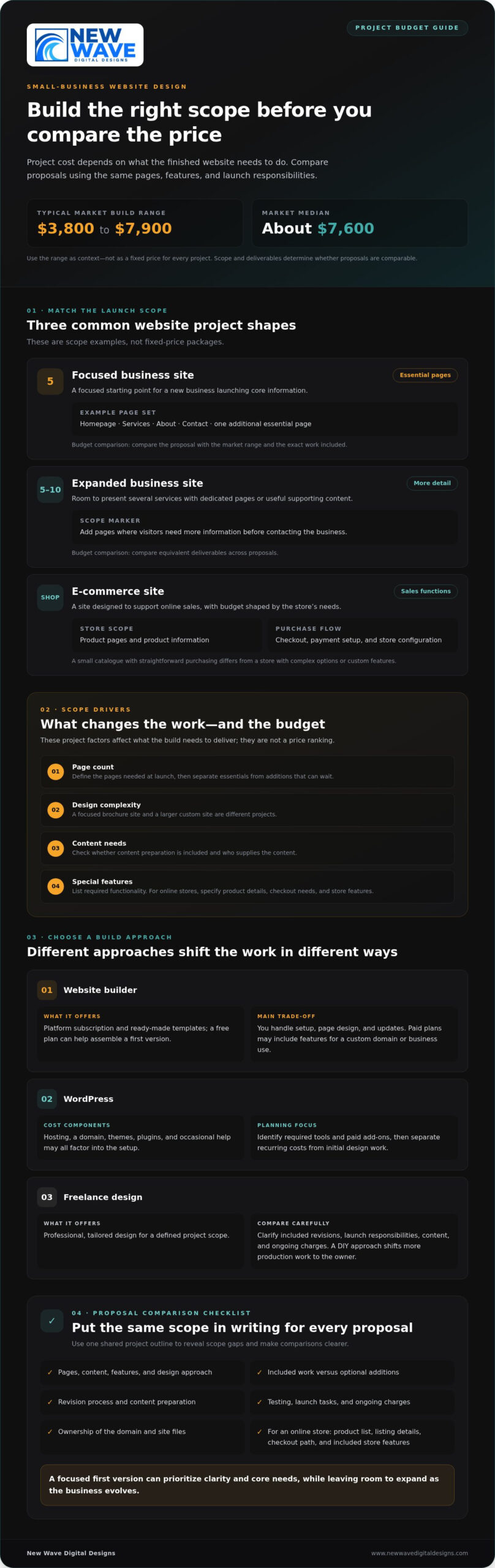
On the market, a small-business website build typically costs between $3,800 and $7,900, with a median of about $7,600. If you’re weighing how much a small business website should cost in 2026, the right budget depends on what the site needs to do and how much design and development it requires.

It’s reasonable to want a clear figure before committing, especially when a project quote may not show what you’ll spend to keep the site running. A useful comparison separates the initial build from recurring expenses, so you can see what’s included and plan for the long term.

This guide explains the factors that shape design costs, then covers hosting, domains, SSL certificates, and WordPress upkeep. You’ll have a practical framework for comparing options and matching your budget to the website your business needs.

Key Takeaways

  • Set your budget around the site’s purpose, required features, and content needs, not just the number of pages.
  • Compare website builders, WordPress, and freelance design by weighing both upfront work and ongoing commitments.
  • A starter project can focus on essential pages first, leaving room to expand as your business evolves.
  • Plan separately for hosting, domain renewal, SSL, and WordPress care so recurring expenses don’t catch you by surprise.
  • Use the cost breakdowns to identify which parts of a website project matter most for your business.

How much should a full website design cost?

In the United States, a small-business website build typically falls within the market range of $3,800 to $7,900, with a median of about $7,600. To limit hidden costs and contract risks, define the deliverables, revision process, ownership terms, launch responsibilities, and any ongoing charges in writing before work begins.

New Business Budget Recommendations

For a new business, begin with the essential pages and functions needed to explain the offer and help visitors take the next step. A five-page site can provide a focused starting structure, while a 5-10-page site allows room for additional services or useful supporting content. Compared with a larger custom build, a lean launch prioritizes clarity and core needs over extra features.

Before setting a budget, list the pages, content, and features you need at launch. Separate essentials from additions that can wait, then use the same written scope to compare proposals. This keeps the first version focused and makes future expansion easier to plan.

Small Business Website Budget Examples

Consider a local service business that needs a homepage, service information, an about page, and a contact page. That five-page example offers a clear baseline for comparing design proposals. A business with several distinct services may need a 5-10-page version, adding dedicated pages where visitors need more detail before reaching out.

These examples differ mainly in scope, not in a universal fixed price. The market range of $3,800 to $7,900 provides a comparison point for a build, while the median is about $7,600. Use your page list and required functionality to judge whether a proposal fits the project.

Website Project Budgets and Ranges

A project budget reflects what the finished site needs: page count, design complexity, content, and special features. A focused brochure site and a larger custom site are different projects, even if both serve a small business. Compare proposals against the same written scope, including what the design and development work will deliver.

For a practical comparison, ask each proposal to separate included work from optional additions and ongoing charges. Check whether content preparation, revisions, testing, and launch tasks are covered. General price ranges offer context, but the clearest comparison is between proposals based on identical deliverables.

E-commerce Website Budgets

An e-commerce site has a different budget profile because it needs to support sales, not just introduce a business. Product pages, checkout, payment setup, and store configuration all shape the work. A small catalogue with straightforward purchasing needs differs from a store with complex product options or custom features.

To scope an e-commerce launch, prepare a product list, note the information each listing needs, and map the customer journey from product selection to checkout. Then compare proposals by their included store features and launch tasks. This shows whether the design supports the shop you need, without treating every online store as the same project.

Option Scope Budget comparison Best suited to
Focused business site Five essential pages Compare against the market range New businesses launching core information
Expanded business site 5-10 pages Compare equivalent deliverables Businesses presenting several services
E-commerce site Product and checkout functions Assess store scope and launch work Businesses selling online

Choose an option by matching its written scope to the pages and features your business needs at launch.

DIY builders trade hands-on setup for platform fees, WordPress separates hosting and upkeep, and freelance design covers professional project work. Each approach balances your time, control, and support differently.

Website Builder Costs

Website builders offer a platform subscription and ready-made templates, making them a lower-cost route for businesses willing to build their own pages. A free plan can help you assemble a first version, while paid plans may include features needed for a custom domain or business use.

Compare the plan’s monthly price with its included features before choosing. The main trade-off is time: you handle setup, page design, and updates yourself.

WordPress Costs

WordPress costs can combine hosting, a domain, themes, plugins, and occasional help, rather than a single builder subscription. The final setup depends on which tools the site needs and how much work you manage yourself.

WordPress offers flexibility, but owners need to account for the components behind the platform. List the required features, identify paid add-ons, and separate recurring costs from initial design work. This breakdown makes it easier to compare a WordPress proposal with a builder plan.

At this budget, define a focused scope: page count, design approach, included revisions, and launch responsibilities. A freelancer can provide a tailored design without the broader structure of a full-service agency project, while a DIY approach shifts more production work to the business owner.

Compare build methods by separating project fees from recurring site costs:

Before choosing a template or signing a freelance agreement, write down the pages, features, and launch tasks you expect. Clarify who supplies the content, how revisions work, who controls the domain and site files, and which charges recur after launch. These details can reveal scope gaps and contract risks hidden by a headline price.

If you’re weighing a custom build against a platform-led approach, explore a website design approach that fits your project’s scope.

Website pricing for starter projects

A starter project can establish a polished online presence while keeping the initial scope focused. Prices can vary by state or city as provider rates and project requirements differ, but the deliverables remain central to comparing quotes.

Factors That Affect Website Pricing

Page count, custom design, functionality, and content shape a website quote. The amount of design, development, and writing required varies from project to project.

Platform choice matters, too. A Squarespace template-based build can use an existing design structure, while custom functionality adds development work. Before requesting proposals, list the pages, features, content responsibilities, and launch tasks your business needs. A shared scope makes estimates easier to compare.

Freelancer and Agency Pricing

The right comparison depends on the work each quote includes.

Review proposals line by line: identify who handles planning, design, development, revisions, and launch. A lower quote may cover fewer deliverables, while a larger agency project may include a broader set of services. Compare the scope and responsibilities, not just the total.

Custom Website Pricing

Custom builds suit businesses that need a distinct design or features beyond a standard template.

For a starter build, define which custom elements are essential now and which can wait. For example, prioritize core service pages and the contact journey, then plan additional functionality for a later phase. A written scope helps prevent optional features from becoming unexpected project costs.

Ongoing care is a separate budget line from the initial build. Confirm which tasks and support each plan includes.

Project option Typical market range Compare by
Landing page Page scope and launch tasks
Freelancer build Deliverables and responsibilities
Boutique agency build Strategy, design, and development
Custom agency project Custom functionality and scope

Choose a starter project by matching its deliverables to your launch priorities, then budget separately for ongoing care.
Small business website costs: compare design and ongoing expenses

Hosting, domain names, and SSL certificates

Domain registration, hosting, SSL, and business email are recurring expenses, often billed on different schedules.

Budget for each separately: the domain identifies your site, hosting keeps it available online, SSL supports a secure connection, and email provides business addresses.

Domain and Hosting Expenses

A domain and hosting serve different roles, so compare their renewal periods and service levels separately. A .com domain generally falls within the same annual domain range.

Before selecting a plan, list the domain renewal, hosting term, and any introductory pricing separately. Then note what the hosting plan covers and when regular billing begins.

SSL and Security Costs

SSL certificate costs can vary substantially, so include renewal terms in your budget rather than assuming a certificate is always a separate paid purchase.

For a clear annual budget, record SSL renewal and email billing alongside domain and hosting dates. Identify who handles security and updates, and whether that work is included in hosting or billed separately. This separates infrastructure charges from ongoing website upkeep.

Use a simple cost ledger to avoid mixing monthly and annual amounts. Record each item, its billing period, and its next renewal date. For example, list a domain as an annual cost, shared hosting as a monthly cost, and email by user and month. This makes expenses easier to review without confusing one-time setup with recurring fees.

  • Domain: Record the annual registration and renewal cost.
  • Hosting: Compare shared and managed plans by monthly rate and included service.
  • SSL: Track certificate cost and renewal period separately.
  • Email: Multiply the per-user monthly charge by the number of business accounts you need.

Hosting promotions can make the first bill differ from later renewals, so distinguish introductory rates from standard charges. A shared plan and a managed WordPress plan also offer different service levels; compare features rather than choosing on price alone. Include updates and security responsibilities in your plan, especially when they are not part of hosting.

For a practical final check, group expenses into setup and recurring costs, then note the billing period for each. A domain may renew annually while hosting and email are billed monthly. Keeping those schedules visible helps you prepare for renewals and understand the cost of maintaining the site beyond its initial build.

WordPress themes, plugins, and maintenance

Ongoing WordPress costs combine software, hosting, and care for the site. Typical maintenance and support costs depend on whether the plan covers updates, security monitoring, fixes, and hands-on help; those service prices aren’t included here.

Treat that as a planning range, not a maintenance-plan price.

Theme and Plugin Expenses

A WordPress theme shapes the site’s visual framework, while plugins add specific functions.

Before purchasing, map each plugin to a site requirement, such as a form or booking feature. Avoid overlapping tools, and check whether each subscription renews annually or monthly. This inventory helps keep software costs visible as the site grows.

Maintenance and Support Budgeting

Maintenance is separate from web design or a custom design project. It covers work that keeps an existing site current and functioning, including software updates, security, and technical fixes. The cost of a plan depends on its tasks and level of support.

To build a useful budget, note which updates happen regularly, who handles problems, and whether performance work is included. Then compare that checklist with the care plan’s scope. This shows whether the plan fits your site’s needs, rather than covering tasks you don’t require.

Planning for Ongoing Care

A lean WordPress site with few paid plugins has different upkeep needs from a site relying on several subscriptions and custom features. Track hosting, domain renewal, add-ons, and support separately. For example, don’t mistake an annual plugin renewal for a monthly maintenance charge.

Use this short review to shape your budget:

  • Inventory: List themes, plugins, and software subscriptions, including each renewal period.
  • Assign: Decide who handles updates, security checks, and troubleshooting.
  • Compare: Match each care plan’s included tasks to your list before selecting a service level.

As the site changes, revisit the list after adding a plugin or custom feature. New software can bring renewals and extra upkeep, so update the budget as the site grows. A clear record helps distinguish essential care from optional enhancements.

For help planning WordPress website maintenance, identify the updates and support your site needs, then align the service scope with that checklist.

New Wave Digital Designs: Shopify Website Design

New Wave Digital Designs offers Shopify Website Design for small businesses planning to sell online. When comparing website budgets, decide whether your project needs an online store, a business information site, or ongoing care. The right scope depends on your platform and required features.

For store projects, New Wave Digital Designs offers Shopify Website Design; for other platform needs, it also provides WordPress Website Design and SquareSpace Website Design. Website Maintenance supports businesses planning for ongoing site care after launch. Outline your goals, required pages, key features, and maintenance needs so the conversation can focus on scope.

Contact New Wave Digital Designs to discuss your website project and the approach that fits your business.

Shape a website budget around your next move

A website budget is most useful when it reflects what your business needs next, not every feature it might someday add. As you decide how much a small business website should cost in 2026, focus on the experience you want customers to have, the work required to create it, and the care needed after launch.

Turn your vision into a practical brief: describe your audience, outline what you want visitors to do, and identify a platform that suits your plans. New Wave Digital Designs offers Shopify Website Design, WordPress Website Design, and SquareSpace Website Design to shape a site around those priorities.

A well-considered project starts with clear goals and a scope that can evolve with your business. Contact New Wave Digital Designs today to discuss your website plans and take the next step with confidence.

Frequently Asked Questions

What should a small business expect to pay for a website?

For a small-business website build, the collected market range is $3,800 to $7,900, with a median of about $7,600. Treat that as a reference point, not a fixed quote: a five-page informational site and an online store have different scopes. To judge a proposed budget, compare the same pages, functions, content tasks, and launch responsibilities across estimates.

What will it actually cost?

To answer how much a small business website should cost in 2026, first separate the initial build from recurring expenses. Your actual total depends on the build method and the work the finished site requires. For example, a DIY platform has a different cost structure from a custom project. List required features, then sort expenses by whether they are one-time, monthly, or annual.

Can I build my own website?

Yes. DIY can suit a business with a straightforward site and someone available to create the pages. Start by listing the required content and features, then decide whether you can maintain the site as well as build it.

Is a More Expensive Website Worth It?

It can be, if the added investment supports requirements your business genuinely has. Custom design, additional service pages, or e-commerce features can require more planning and development than a simple template site. For instance, an online shop needs a customer journey that supports browsing and checkout. Compare the added deliverables with your business goals rather than assuming a higher quote is automatically a better fit.

Is professional web design still worth paying for in 2026?

Professional design can be worthwhile when you need cohesive branding, custom features, or a site structure that is difficult to create yourself. It also shifts design and development tasks away from your team. Before choosing, define what you want visitors to do, such as request a service or explore products. Then assess whether professional support addresses a real project need.

So what should you actually budget?

How much a small business website should cost in 2026 depends on the work and expenses your site needs. Set out the pages, functions, content, and launch tasks first. Then add recurring costs for hosting, domain renewal, email, paid plugins, and maintenance where applicable. A simple spreadsheet with separate one-time and recurring columns can show which expenses affect launch and which continue afterward.

Want a Real Number for Your Site?

A project-specific price depends on scope and is provided after a quote request. To make the estimate useful, prepare a brief with your audience, required pages, desired features, platform preference, and content responsibilities. Include ongoing care needs, too. Clear inputs help define the project and clarify what the proposed work covers.

What is the cost of hiring a freelancer to build a small business website in 2026?

In the United States, a small-business website built by a freelancer typically costs in 2026. The project scope shapes where an estimate falls within that range: page count, custom design, content work, and required functions all affect the build. Compare proposals using one shared list of deliverables, and distinguish project work from recurring hosting or maintenance expenses.

Questions to Ask a Web Design Agency About Price and Timing

A polished portfolio isn’t enough to show whether an agency is the right partner. The most useful questions to ask before hiring a web design agency cover its past work, project timeline, team, full cost, and support after launch. Clear answers help you compare proposals on more than appearance alone.

It’s natural to focus on the design you want and when you need it. But the working relationship behind the finished website matters just as much: who makes decisions, how the team shares progress, and what happens when the site needs attention later. This guide covers practical questions to help you assess an agency’s portfolio, process, team, pricing, and ongoing support. You’ll get a clearer picture of the project scope, details that affect timing, and whether the partnership fits your business goals before you commit.

Key Takeaways

  • Review portfolio projects and case studies for evidence of thoughtful design, technical capability, and fit with your business goals.
  • Set your website goals and required features early so the agency can shape a realistic project plan and timeline.
  • Clarify who handles hosting, updates, security, testing, and support once the site is live.
  • Ask for a clear project scope that explains upfront work, ongoing maintenance, and possible marketing expenses.
  • Learn who will lead the work, who makes key decisions, and how the team will share progress with you.

1. What does their client portfolio look like?

Start with three recent projects, then inspect each live website rather than relying on screenshots. Compare the visual design, page structure, and working features with the goals described in each case study. A restaurant site, for example, should make its menu and reservation path easy to find. A professional services site should guide visitors toward a clear inquiry step. These examples reveal whether the agency adapts its design to each business or repeats one visual formula.

Ask what the agency contributed to each featured project. Did its team handle strategy, design, development, or only one part? A case study should clearly explain that division, especially when multiple partners contributed. Look for technical skill on the live site: test the navigation, submit forms, and view pages on a phone. This helps you assess design quality, technical capability, and relevant experience without treating polished imagery as proof that a site works.

Industry fit matters, but an identical client list isn’t essential. Instead, look for examples that share your audience, business model, or website goals. If you sell products online, inspect an e-commerce project for product discovery, checkout clarity, and mobile usability. If you book appointments, look for a straightforward route from service information to booking. Ask how the agency would apply relevant lessons to your site while shaping a distinct identity.

Review the agency’s own portfolio as a working website, too. Can visitors filter projects, open detailed case studies, and return to the main portfolio easily? If the agency has a careers page, check whether job information and application steps are easy to find. These details show how the team handles navigation and content organization on its own site. Also ask how it evaluates a project’s performance, such as by tracking traffic, user behavior, or conversions.

Connect portfolio examples to the proposed scope. Ask whether the design was custom or based on a pre-made template, and which elements can be adapted. A proposal should identify included deliverables and explain how revisions are handled. Your contract should also clarify who owns the finished website and receives administrator access. These questions help you compare proposals fairly, rather than judging an agency by presentation alone.

Finally, ask about the scale of ongoing work behind the portfolio. Managing 100 or more websites is usually a positive sign when evaluating an agency’s experience and ongoing support. Still, the relevant question is how the team organizes that responsibility and keeps each site maintained. Ask who handles updates and how requests are managed. A strong portfolio paired with a clear process gives you a more complete view of the agency’s capabilities.

2. How long will it take to design, develop, and launch the website?

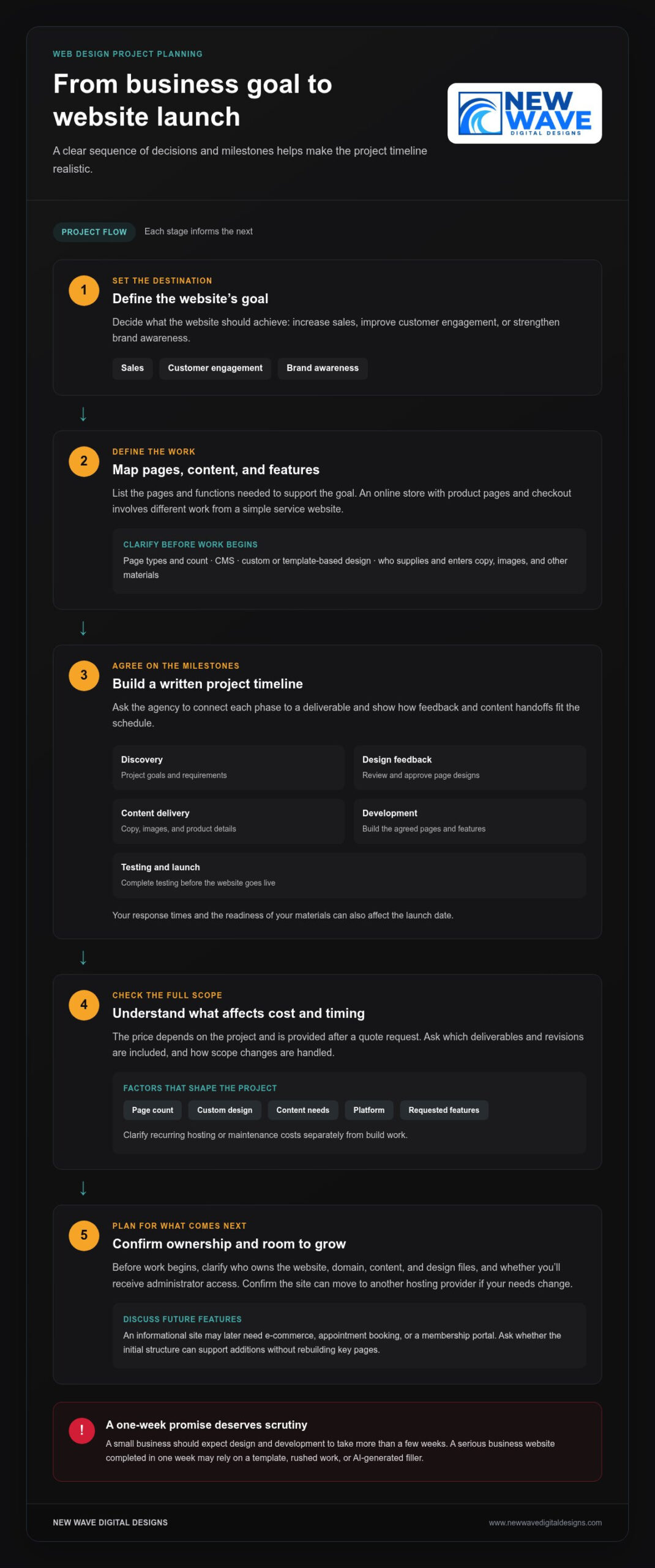
A useful timeline starts with a clear goal, not just a launch date. Decide whether the website should increase sales, improve customer engagement, or strengthen brand awareness. Then identify the pages, content, and features needed to support that goal. An online store with product pages and checkout involves different work from a simple service website. Ask the agency to link each project phase to a deliverable, such as approved page designs, completed development, or launch testing.

Ask how long a comparable project typically takes and what could affect your schedule. A small business should expect design and development to take more than a few weeks. A serious business website completed in one week may rely on a template, rushed work, or AI-generated filler. Request a timeline with milestones for discovery, design feedback, content delivery, development, and testing. Your response times and the readiness of your copy, images, and product details can also affect the launch date.

Clarify the structure before work begins. Ask how many page types the project needs, which content management system (CMS) will manage them, and whether the design is custom or template-based. For example, a reusable service-page layout can keep related pages consistent while allowing distinct content. Identify who supplies and enters the copy, images, and other materials. A written scope makes it easier to see how added pages or features could change the schedule and budget.

Ownership affects your options after launch. Ask who owns the website, domain, content, and design files, and whether you’ll receive administrator access. Confirm that the site can move to another hosting provider if your needs change. Discuss how the platform can grow, too. An informational site may later need e-commerce, appointment booking, or a membership portal. Ask how those features could be added and whether the initial structure can support them without rebuilding key pages.

Pricing transparency makes the timeline easier to assess. The price depends on the project and is provided after a quote request. Key cost factors include page count, custom design, content needs, platform, and requested features. Ask which deliverables and revisions the estimate covers, and how scope changes are handled. Clarify recurring hosting or maintenance costs separately from build work, so your budget reflects the full arrangement.

For a project on Shopify, WordPress, or Squarespace, the platform choice can shape the design and build process. A website design approach should align the platform, required features, and future growth with your business goals.

3. Hosting, maintenance, and post-launch support

A website needs care after launch, so define who handles each technical task. Ask whether hosting is included and what it covers, such as backups, uptime monitoring, and security. Clarify who installs platform, theme, and plugin updates, and who fixes bugs if an update affects a page. For a WordPress site, establish how plugin updates are tested before they reach the live website. A written scope should distinguish hosting responsibilities from maintenance work, so you know where each request belongs.

Ask what post-launch support includes and how long it lasts. Does the project include final testing, launch assistance, and corrections for issues discovered after publication? Clarify whether revisions cover design refinements, broken links, or changes to supplied content. These are different types of work. Ask how ongoing maintenance is arranged, what tasks it covers, and how additional requests are handled. Website maintenance provides a defined process for updates, security patches, and bug fixes, rather than leaving essential upkeep unassigned.

Response expectations matter most when a problem affects customers. Ask how to report a website outage, who receives the request, and what response times apply during the agreed support period. Find out whether requests go through a ticket portal, dedicated email, or another documented channel. A checkout error, for example, needs a clear reporting path and owner, even if it’s discovered outside ordinary project work. Separate routine edits from urgent faults, and make the support terms clear in the agreement.

Also ask who manages hosting support, backups, security, and account access. Confirm who controls the domain and hosting account, and how you can access important credentials. A clear handover should explain where backups are stored and how restoration is handled if a failed update disrupts the site. Hosting and security arrangements should identify responsibilities, not simply name a platform. If you plan to move providers later, ask what files, access, or assistance are needed for a smooth transfer.

Questions to Ask a Web Design Agency About Price and Timing

4. How much will the total cost of the project be and are there any hidden fees?

Compare an agency, freelancer, and in-house team by matching scope, skills, and responsibilities. An agency may coordinate design, development, and project management; a freelancer may handle a narrower scope; an in-house team requires your business to provide direction and capacity. Ask who will complete each task, manage revisions, and keep the work moving. Compare written proposals based on the same audience, page requirements, platform, and launch needs, rather than headline prices alone.

The price depends on the project and is provided after a quote request. Cost factors include page count, custom design, content needs, platform, and requested features. Ask for a written breakdown of deliverables, exclusions, payment milestones, and recurring costs. For example, a WordPress proposal should distinguish design and build work from hosting, maintenance, and ongoing marketing. Confirm how the agency handles scope changes, added pages, and revision rounds. A clear contract connects each cost to specific work and acceptance steps.

A small, fixed-scope project can show how an agency communicates, makes design decisions, and delivers work before you make a larger commitment. For example, commission a landing page or a defined design task with agreed deliverables and a review date. Set the audience, purpose, and approval process in writing. Ask who supplies copy and images, who gives feedback, and how revisions are handled. The trial should be paid or otherwise clearly scoped, with ownership and usage rights documented.

Ask the agency to explain its process from discovery through launch. A proposal should identify milestones for research, design, development, testing, and approval, along with your responsibilities at each stage. Clarify what the project includes, such as page templates, copywriting, image sourcing, SEO setup, training, and post-launch corrections. These items affect both budget and timing. If your team must supply product details or approve page layouts, assign an owner and agree on a response process before work begins.

Ask how SEO, accessibility, mobile responsiveness, and website performance are addressed in the scope. A useful answer describes specific tasks, such as setting page titles and alt text, checking layouts across devices, and testing load behavior. Ask what the agency measures and what final testing includes. Watch for red flags: vague deliverables, pressure to sign before reviewing terms, unclear ownership, or promises of guaranteed rankings. A proposal that can’t explain its process makes it difficult to judge value.

Use the same brief to compare every proposal, then assess communication alongside the finished sample. Ask the agency to explain scope differences, such as a template-based build versus custom page design. Confirm who approves work, how feedback is recorded, and what triggers additional charges. The strongest proposal isn’t necessarily the lowest priced. Look for the clearest agreement between your goals, the work promised, and each party’s responsibilities.

5. Agency organizational structure and team

A polished proposal can hide a complicated handoff. Ask who leads strategy, design, development, and quality checks, then learn how those roles connect. For example, a project manager may gather feedback, while a designer shapes page layouts and a developer builds them. Clarify who has final approval on your behalf and who answers day-to-day questions. A clear structure prevents conflicting instructions and helps decisions move through a defined channel.

Find out who will actually work on your website. The people presenting the pitch may not be the ones producing the pages. Ask whether the work is handled by employees, independent specialists, or a mix, and who coordinates outside contributors. If a developer joins after design approval, learn how that person receives the design decisions and project context. You want continuity between the original brief and the final build, not a fresh interpretation at every handoff.

Ask how the team divides responsibility for details that cross disciplines. A mobile layout, for instance, requires both design decisions and technical testing. Search visibility can involve page structure as well as content decisions. Ask who owns each task, how completion is reviewed, and who resolves disagreements. If the agency also handles graphic design, clarify how visual assets fit the website’s brand and who approves them before development.

Communication is part of the team structure. Ask who your main contact will be, how often you’ll receive progress updates, and where decisions are recorded. A shared project document can track page approvals, content dependencies, open questions, and next steps. If your team works across time zones, agree on overlapping work hours and a practical response window. The goal is a reliable rhythm, not constant meetings or updates from several people.

Ask what happens if a key team member becomes unavailable during the project. Find out who can step in, how project files and decisions are documented, and whether you’ll need to repeat earlier discussions. This matters when a designer’s approved layout needs to pass to a developer or a launch issue needs an owner. Clear documentation and backup responsibilities protect continuity without making you manage the agency’s internal staffing.

Finally, ask how the agency measures team capacity and coordinates parallel projects. Managing 100 or more websites is usually a positive sign when evaluating experience and ongoing support, but the important detail is how work is assigned and maintained. Ask how your project receives attention alongside other commitments, and who monitors progress. A strong team can explain its structure in plain terms and connect each role to a concrete responsibility.

If your next step is aligning website design with search visibility and brand assets, discuss your website goals with a team that can consider those needs together.

New Wave Digital Designs: Shopify Website Design

New Wave Digital Designs offers Shopify website design for businesses planning a new online store or refining an existing storefront. For other projects, the agency also designs websites for WordPress and Squarespace. Its Website Maintenance service supports businesses caring for a site after launch. Consider your platform, project goals, and ongoing needs together when deciding what kind of partnership fits. A clear conversation about your priorities can help shape the next step, whether you’re building a storefront or planning a redesign. Contact New Wave Digital Designs to discuss your website goals.

Turn your priorities into a clear next step

A website project is easier to shape when you define what success should look like for your business. Before moving forward, write down the change you want the site to create, the experience you want visitors to have, and the decisions you need to make with your design partner. That brief gives every conversation a useful starting point. The questions to ask before hiring a web design agency should help you find a partner whose approach fits your priorities, not simply a polished presentation.

New Wave Digital Designs offers Shopify Website Design, WordPress Website Design, and SquareSpace Website Design. If you’re ready to discuss a website project and explore which platform fits your goals, contact New Wave Digital Designs. A thoughtful first conversation can turn your ideas into a focused direction for the next stage of your business.

Frequently Asked Questions

What Questions Should I Ask Before Hiring a Web Designer?

Ask how the designer turns your business goals into page layouts, what you need to provide, and how decisions are approved. Request an example of a project where the original brief changed, then learn how the team responded. Also discuss how success will be assessed after launch. An online store, for instance, might track completed purchases, while a service business might focus on qualified inquiries.

How long will it take to design, develop, and launch the website?

Timelines depend on the number of page types, features, approvals, and how quickly content is ready. A small business website typically takes more than a few weeks, while a one-week build may rely on a template, rushed work, or AI-generated filler. Ask for a schedule showing when you need to supply content or approve designs. These dependencies help explain how your workflow can affect the launch date.

How much will the total cost of the project be and are there any hidden fees?

The total depends on scope, design requirements, content, platform, and requested features. Ask for a written estimate that separates build work from recurring maintenance or marketing expenses. Check whether the agreement covers stock images, third-party tools, payment processing integrations, and additional revisions. A new booking feature, for example, could require work beyond the original page design. Clear definitions help you understand what changes the project cost before approving them.

Next steps: What should I expect after choosing an agency?

Expect the agency to confirm the scope, responsibilities, approvals, and project schedule in writing before work begins. Choose a point person who can gather feedback, provide brand materials, and make decisions. The first working session often turns broad goals into specific audience needs, page priorities, and content requirements. Keep a shared record of approvals and open questions, so the team can act on decisions without revisiting settled details.

What control or ownership do you have as a client over the code?

Your contract should explain what you own, what you license, and what remains tied to a platform or third-party tool. Ask whether you’ll receive access to the website’s administrator account, source files, and any custom code created for the project. Clarify how a future developer could access or transfer those materials. For example, an account owner should know how to manage user permissions without relying on the original designer.

What does their client portfolio look like?

A portfolio should show more than attractive first-page images. Open a case study and look for the business problem, the agency’s role, and the finished site’s practical features. Check whether navigation works, forms submit, and pages remain readable on mobile. Compare the featured projects with your business model rather than expecting identical clients. A project serving a similar audience can reveal how the agency approaches content, user journeys, and conversion paths.

What happens if you need to make significant changes to your website?

Ask how the agency assesses a major request before work begins. It should clarify whether the change affects existing page layouts, integrations, content, or the launch schedule, then document revised deliverables and approvals. Adding online booking, for example, may change both the visitor journey and the information your team must maintain. Establish who can authorize the change and how completed work will be reviewed before it goes live.

What questions should you ask a web design agency before hiring them?

The most useful questions to ask before hiring a web design agency cover decision-making, ownership, communication, and how the work will serve your audience. Ask who leads the project, what you need to provide, how progress is recorded, and what happens when priorities shift. Look for answers that connect tasks to outcomes rather than relying on broad claims. A clear response should explain your responsibilities as well as the agency’s.