
People searching for “professional web development” may be comparing more than visual styles. Strong web development connects your brand, platform, and customer journey to the goals your website needs to support. The key is turning your vision into a site that works for your customers and for the business behind it, an approach championed by New Wave Digital Designs.
It’s understandable to feel unsure where to begin. Your brand and priorities may be clear, yet translating them into a site structure, choosing between Shopify, WordPress, and Squarespace, and planning for future growth can feel less certain. This article explains the main decisions involved in professional web development, from shaping a responsive, brand-aligned experience to selecting a platform that fits your needs. You’ll also learn how thoughtful design, technical foundations, and ongoing care can support a cohesive customer journey shaped around your business goals.
Key Takeaways
- Professional web development connects brand strategy, useful content, and reliable functionality to create a website that serves visitors and business goals.
- Compare Shopify, WordPress, and Squarespace by your commerce needs, content plans, and preferred approach to site management.
- Evaluate web development beyond visual polish by considering the process, platform fit, mobile experience, security, and ongoing support.
- A clear process from discovery through testing and launch helps shape the site structure and resolve key decisions before implementation.
- Plan for maintenance and hosting after launch so your website can be reviewed, updated, and supported as your business evolves.
What Professional Web Development Builds Beyond a Good-Looking Website
A polished visual identity can invite visitors in. Professional web development gives that experience structure by bringing strategy, design, implementation, testing, and continued technical care together. A well-built website translates a brand into a usable, consistent digital experience shaped around real business needs.
Design and development are closely connected, but serve distinct roles. Design shapes the site’s visual language and how information is presented. Development turns that direction into working pages, navigation, and functionality. The broader discipline of Web development includes both the work visitors see and the technical systems that make a website function.
What is included in professional web development?
The work often begins with discovery: understanding the business, its audience, and what visitors need to do. Information architecture then organizes pages and content into a clear hierarchy. Visual design establishes the brand’s look, and responsive implementation adapts layouts and functions to different screen sizes. Quality assurance checks that key pages, links, and features work as intended.
Each decision should reflect the customer journey. Someone looking for service details may need clear descriptions and an easy next step. A shopper may need useful product categories, informative product pages, and a straightforward route to purchase. Project scope depends on the business, platform, content, and required functionality, so the plan should fit the actual needs rather than follow a one-size-fits-all template.
How does a professionally developed website support business goals?
Clear structure helps visitors find relevant information without needless searching. Focused content can answer common questions and point to an appropriate next step, whether the goal is to inform customers, encourage inquiries, or support online sales. These are ways a website can serve business goals, not promises of a particular outcome.
Mobile usability, accessible content, and dependable performance belong in planning from the outset, not as finishing touches. Responsive layouts help keep information and functions usable across screen sizes. Readable text, descriptive links, and clear controls make pages easier to follow, while testing can reveal issues before launch. These foundations support a coherent customer experience and give a business a site it can continue to maintain and evolve.
Shopify, WordPress, or Squarespace: Match the Platform to the Work
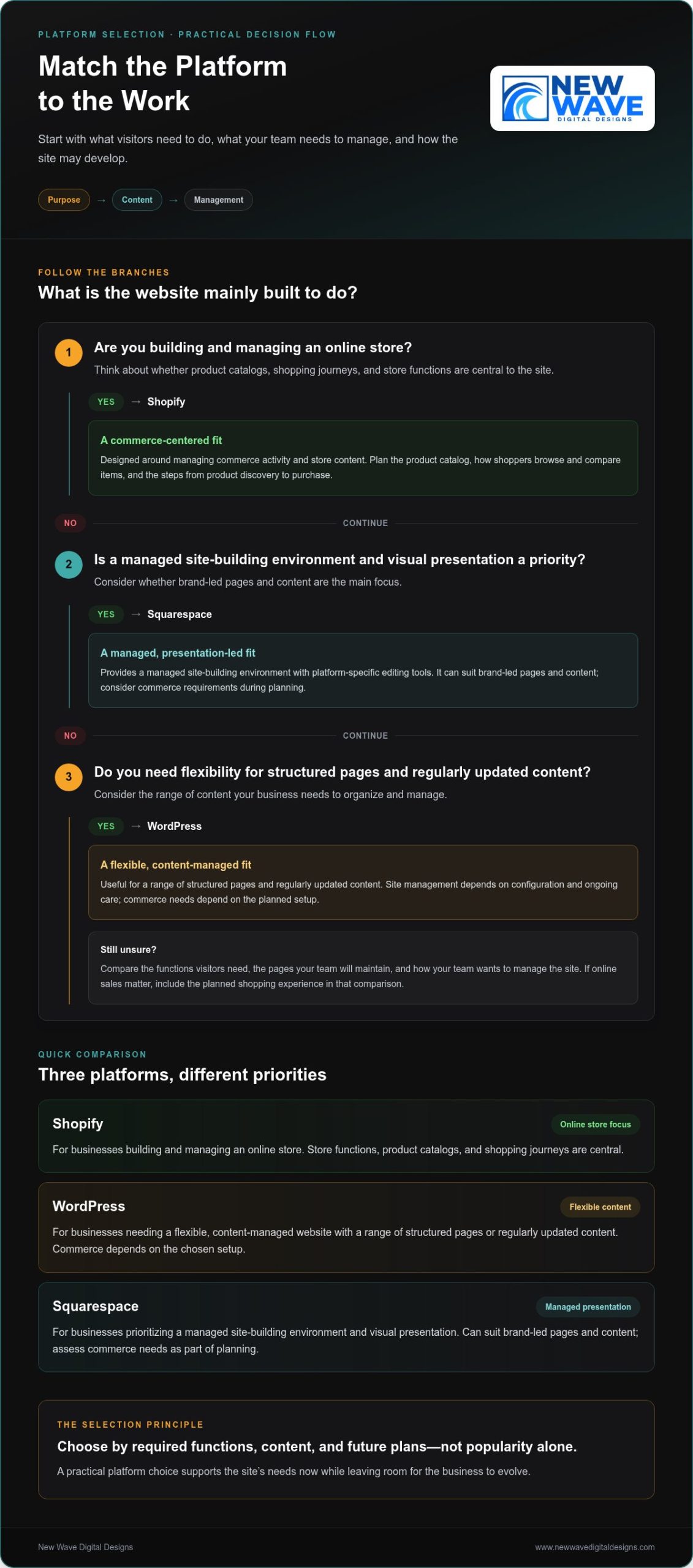
A platform should fit the website’s purpose, not dictate it. The right choice depends on what visitors need to do, what content the business needs to manage, and how the site may develop over time. Compare platforms by practical requirements rather than popularity alone.
| Platform | Typical use | Content and commerce needs | Management considerations |
|---|---|---|---|
| Shopify | Businesses building and managing an online store | Product catalogs, shopping journeys, and store functions are central | Designed around managing commerce activity and store content |
| WordPress | Businesses that need a flexible, content-managed website | Useful for a range of structured pages and regularly updated content; commerce needs depend on the planned setup | Offers flexibility, with site management shaped by its configuration and ongoing care |
| Squarespace | Businesses prioritizing managed site-building and visual presentation | Can suit brand-led pages and content, with commerce needs considered during planning | Provides a managed site-building environment with platform-specific editing tools |
Selection principle: Start with required functions, content, and future plans. This helps keep the site practical now while leaving room for the business to evolve.
When does Shopify fit an e-commerce website?
Shopify is built for businesses creating and managing an online store. Start planning with the product catalog, how shoppers will browse and compare items, and the steps from product discovery to purchase. Organize categories so products are easy to find, provide the details shoppers need to understand each item, and make the next step clear. Businesses considering a broader cross-border ecommerce strategy can use the International Trade Administration’s guidance as a reference while defining their plans. For store-specific design considerations, explore the Shopify website design guide.
How do WordPress and Squarespace serve different website needs?
WordPress may suit a business that values flexibility in organizing and managing a range of content. Squarespace may be a fit when a managed site-building environment and visual presentation are priorities. Neither platform is right for every organization. Compare the pages you’ll maintain, the functions visitors need, and how your team wants to manage the site. If online sales are important, include the planned shopping experience in that comparison rather than treating the platform choice as a purely visual decision.
These decisions are most useful when tied to the customer experience and the work the website must perform. New Wave Digital Designs creates custom websites for Shopify, WordPress, and Squarespace, with platform and design choices shaped around business needs. Explore custom website design to learn more.
From Discovery to Launch: What a Professional Development Process Looks Like
A website project can feel complex when brand decisions, content, platform choices, and technical details arrive all at once. A structured process breaks the work into manageable stages. Each stage clarifies what the site needs to do and gives the next decisions a clear starting point.
Discovery defines the goals, planning shapes the structure, design establishes the experience, development brings it to life, testing checks the details, and launch moves the site into active use. This sequence creates clarity while allowing scope to reflect each project’s needs.
What happens during discovery, planning, and design?
The first stage connects business priorities with audience needs. What should visitors understand, find, or do? Reviewing existing content and required functionality helps set the project scope, identify missing information, and separate essential features from optional ones.
- Discovery and scope: Define business priorities, intended audiences, content needs, and the functions the website must support.
- Structure and design: Organize pages around visitor needs, then develop a visual direction that reflects the brand and supports the intended experience.
Consider page structure before implementation. Agreeing on how information fits together and where key actions belong can prevent avoidable revisions later. Feedback at this stage helps refine the emerging site while changes are still focused on structure and design. It also gives each design decision a purpose: pages should feel connected to the brand and make sense within the visitor’s journey.
How are development, testing, and launch handled?
Once the structure and visual direction are ready, development turns them into a responsive, functioning website. Content is added, page layouts are built, and planned features are implemented. Working from an agreed scope keeps the build aligned with the project’s goals, while regular collaboration helps resolve questions before they accumulate.
- Development: Build responsive pages, integrate content, and implement the agreed functionality.
- Quality assurance: Review the site on relevant screen sizes and check links, forms, page behavior, and presentation across important user journeys.
- Launch: Put the reviewed website into active use, then continue stewardship through appropriate maintenance, hosting, and security attention.
Testing should follow real visitor tasks, not just a visual review. Submit a contact form, follow the main navigation, and check that important content remains readable across screen sizes. For an online store, review the product-browsing and purchase path. Launch marks a transition, not the end of caring for the website. Continued reviews and maintenance help keep its technical foundation aligned with changing business needs.
How to Evaluate Web Development Quality Before You Commit
A strong portfolio can catch your eye, but polished visuals are only one part of a well-built website. Look for evidence that the work supports a real business purpose: visitors can find what they need, pages work across devices, and the site’s structure fits its intended use.
Use this checklist to assess the approach as well as the finished appearance:
- Process and scope: Does discovery connect your priorities, audience, brand, and required functionality to a clear project plan?
- Platform fit: Are platform decisions explained in practical terms, based on your content needs and the tasks the website must support?
- Responsive experience: Review examples on a smaller screen. Are navigation, text, forms, and key actions easy to use?
- Security and performance: Are security, hosting, and performance testing included in the site plan, with findings evaluated rather than replaced by a blanket promise?
- Ongoing support: Is there a clear path for maintenance and functional reviews after launch?
Portfolio examples are most useful when you examine how they work. Move through the pages and note whether the purpose is clear and the next steps are easy to find. Look for projects with needs similar to yours, then consider whether their layouts, content structure, and functions are relevant to your goals. Visual polish matters, but usability and fit reveal more about the thinking behind a site.
Which technical and user-experience signals matter?
Test the basics as a visitor. Navigate between important pages, try the forms, and check whether essential content is readable and easy to locate. Performance should be measured as part of quality review, not reduced to an unsupported guarantee. Security, hosting, and maintenance also belong in the website plan because a launch-ready site still needs appropriate care as it evolves.
How can you judge whether the process fits your business?
A productive partnership begins with listening. The project plan should reflect your brand and priorities, and platform and functionality choices should be explained in language you can act on. Defined feedback points help you shape the work as it develops; clear responsibilities reduce uncertainty about decisions and content. A thoughtful process also sets out how the site will be supported after launch.
New Wave Digital Designs combines custom website design and development with responsive, brand-aligned experiences and ongoing website support. Explore New Wave Digital Designs to see how a collaborative approach can shape a website around your business. You can also explore web development services.
Build for the Long Term: Launch, Maintenance, and What Comes Next
A website launch is a milestone, not the end of the work. Platforms evolve, content changes, and features that once worked well may need review as the business grows. Planning for care after launch helps keep the site aligned with its purpose and gives the business a clear way to address technical needs over time.
What website maintenance and hosting contribute after launch
Design and development create the site; maintenance and hosting support its continued operation. Site care can include platform and software updates, technical checks, security attention, and reviews of important functions such as forms or shopping paths. Hosting provides the environment where the website operates, while maintenance keeps its components under review. The right plan depends on the platform, site functionality, and business priorities.
These responsibilities are distinct from the initial design and development scope. A site may be complete at launch yet still need recurring attention as its content, technical requirements, and business needs change. New Wave Digital Designs provides website maintenance, managed hosting, and security services. Explore the website maintenance services guide for a closer look at ongoing care.
How can marketing support the website over time?
A well-structured website can provide a foundation for related marketing efforts. Organic SEO can help align site content and structure with search visibility goals, while Google Ads and Bing Ads can support paid search campaigns. These services complement one another, but do not guarantee outcomes. Their role and direction should reflect the business’s objectives, audience, and website content.
Website launch and ongoing support are connected parts of a larger plan. Custom website design and development, maintenance, managed hosting, security, and marketing services can work together to support a cohesive digital presence as needs evolve.
How to take the next step toward a developed website
Before starting a project, consider who the website needs to reach, what visitors should be able to do, which features are essential, what content is ready, and whether Shopify, WordPress, or Squarespace fits the plan. You don’t need every detail settled. A collaborative discussion can help clarify priorities and shape a practical direction around your brand and business needs.
Start a website project conversation to explore the needs and direction of your website.
Shape a Website That Can Grow With Your Business
A website built around your brand and business needs is more than a visual showcase. It brings strategy, useful content, and dependable functionality together to guide visitors through a clear experience. Choosing Shopify, WordPress, or Squarespace based on your content and required features helps create a practical foundation, while a considered process turns an initial vision into a responsive site.
Strong development also looks beyond launch. Website maintenance, managed hosting, and security support ongoing site care, while organic SEO and paid search can complement the website as part of a broader digital approach. Lasting value comes from connecting these decisions to real priorities rather than treating design alone as the measure of success.
New Wave Digital Designs creates custom websites for Shopify, WordPress, and Squarespace, with responsive, brand-aligned design for small and midsize businesses. Ongoing maintenance, hosting, and security services support the site as needs evolve. A cohesive digital presence starts with a website shaped around clear business priorities.
Frequently Asked Questions
What does professional web development include?
Professional web development typically includes planning, design, implementation, testing, and technical care after launch. The process may cover defining goals, organizing pages and content, creating a brand-aligned visual direction, building responsive layouts, and checking that links, forms, and other functions work. The precise scope depends on the business, platform, content, and features the website needs. Development brings these parts together into a useful, cohesive experience.
How do I choose between Shopify, WordPress, and Squarespace?
Choose based on the website’s main purpose, the content you’ll manage, and the functions visitors need. Shopify is designed for businesses building and managing an online store. WordPress can suit businesses that need a flexible, content-managed website, while Squarespace may appeal to those prioritizing managed site-building and visual presentation. Consider future plans, too. The best fit is the platform that supports your practical needs, rather than one selected simply for popularity.
Can a professional website be built around my existing brand?
Yes. A website can be designed around your existing brand identity, including its visual language, messaging, and customer experience. Sharing brand assets and explaining what customers should understand or do helps guide page structure and design choices. If some elements need refinement, the site can still be shaped to feel consistent and recognizable. The goal is to translate the brand into a responsive digital experience that reflects the business across its pages.
How long does professional web development take?
Project duration depends on the website’s scope, platform, content readiness, required functionality, and feedback process. A site with a focused set of pages and straightforward needs differs from one requiring extensive content or more involved features. Clear decisions about goals, structure, and responsibilities can help the work proceed with fewer uncertainties. A project plan should account for actual requirements rather than rely on a one-size-fits-all timeline.
What should I look for in a professional web development partner?
Look for a collaborative process that connects discovery to your brand, audience, and business priorities. A strong partner explains platform and functionality decisions in clear language, defines project scope and responsibilities, and makes room for feedback as the site develops. Review portfolio examples for usability and relevance, not just visual polish. Also consider responsive behavior, security, hosting, maintenance, and how support can continue after launch.
Does a website need maintenance after it launches?
Yes. Websites may need platform updates, technical checks, security attention, and reviews of important functions after launch. Maintenance needs vary according to the platform, site features, and business priorities. Hosting is also an ongoing consideration because it provides the environment where the website operates. Planning for these responsibilities helps distinguish the initial design and development project from the recurring care that supports the site as it evolves.
Can web development support SEO and digital advertising?
Yes. A clear site structure, useful content, and functional pages provide a foundation that can support organic SEO and paid search efforts. SEO can inform how website content and pages are organized, while Google Ads and Bing Ads can direct campaigns toward relevant landing pages. These services can work together as part of a broader digital approach, but website development or marketing alone can’t guarantee rankings, traffic, or business results.
Start a conversation with New Wave Digital Designs about your website project.