
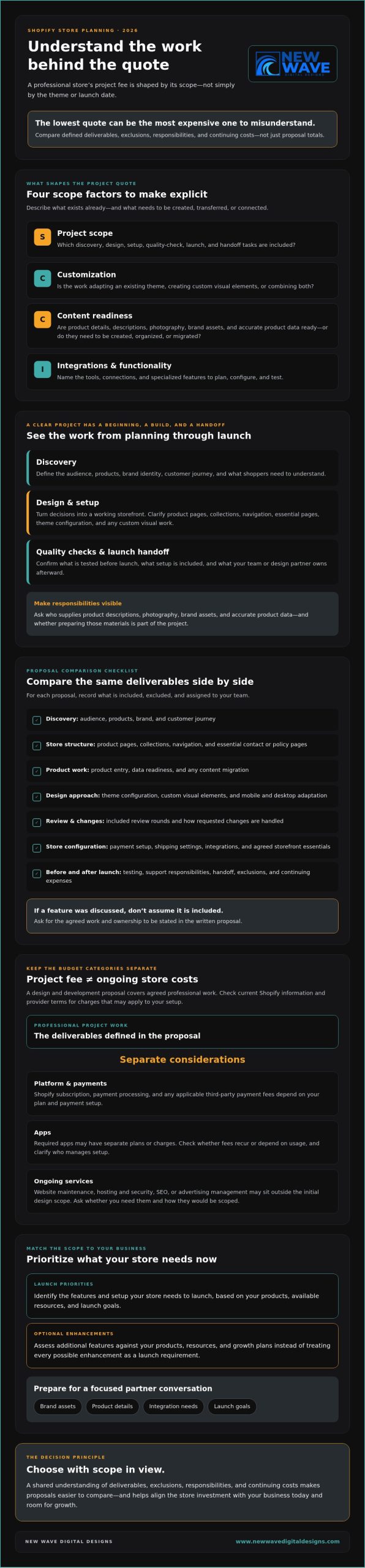
The lowest Shopify quote can be the most expensive one to misunderstand. The cost of a professional Shopify store 2026 depends on more than a template or launch date. When proposals cover different design work, setup tasks, and launch support, comparing totals alone can hide important gaps.
It’s reasonable to want a clear picture of what your investment includes and what may sit outside the project fee. Shopify subscription charges, payment-processing fees, apps, and ongoing maintenance or marketing are separate considerations. Ask what applies to your store rather than assuming these costs are bundled together.
This guide explains the work that can shape a professional Shopify proposal, from brand-led design and store setup to the tasks to confirm before launch. You’ll also find a checklist for comparing deliverables and questions to ask about continuing costs. With a shared understanding of scope, you can choose a design partner and store investment that fit your business today and leave room for growth.
Key Takeaways
- The cost of a professional Shopify store 2026 is shaped by project scope, customization, content readiness, and integrations, not simply by the theme selected.
- Before comparing providers, clarify which discovery, design, setup, quality-check, and launch handoff tasks each proposal includes.
- Use a written checklist to compare product setup, integrations, revisions, testing, and support responsibilities side by side.
- Prioritize the features your store needs to launch, then assess optional enhancements against your products, resources, and growth plans.
- Prepare brand assets, product details, integration needs, and launch goals to make conversations with potential design partners more focused.
What Shapes the Cost of a Professional Shopify Store in 2026?
A Shopify proposal reflects the work required to bring your store to life: project scope, customization, content readiness, and integrations. A store built around an adapted theme and prepared content calls for a different level of effort than one requiring a distinct brand-led experience, extensive product setup, or migration from another platform. The cost of a professional Shopify store 2026 is best understood through its defined deliverables, not a template label or headline quote.
Keep the project fee separate from the ongoing costs of operating the store. A design and development proposal covers agreed professional work. Shopify subscription and transaction-related charges, app fees, and optional continuing services belong in a separate part of your budget. Shopify’s Shopify ecosystem includes tools and third-party services, so check current Shopify information and provider terms for charges that may apply to your setup.
Which store requirements can change a project quote?
Theme adaptation uses an existing design foundation. A more customized storefront may require additional design and development to reflect your brand and customer needs. The quote may also depend on how many products need setup, whether descriptions and images are ready, and whether content or product information must be migrated. Requested integrations and specialized functionality can add planning, configuration, and testing work.
To make proposals easier to compare, describe the products, content, and store features you already have. Then identify what needs to be created, transferred, or connected.
Which expenses are separate from design and development?
Agency project fees are distinct from recurring platform and payment-related charges. Your Shopify subscription, payment processing, and any applicable third-party payment fees depend on your plan and payment setup. Apps may also have separate plans or charges, so review current terms before including a feature in your budget.
- Platform and payments: Confirm current subscription and transaction-related charges with Shopify and your payment provider.
- Apps: Check whether required apps have recurring or usage-based fees, and clarify who manages their setup.
- Ongoing services: Website maintenance, hosting and security, SEO, and advertising management may be separate from the initial design scope. Ask whether you need them and how they would be scoped.
Before choosing a partner, request a written proposal that names included work, exclusions, and continuing expenses. That clarity helps you align the store’s design with your business goals and plan for costs after launch.
What Should a Professional Shopify Store Project Include?
A clear project has a beginning, a build, and a considered handoff. Discovery defines the audience, products, brand identity, and customer journey. Design and setup turn those decisions into a working storefront, while quality checks help catch issues before launch. The proposal should describe each stage and state what your team and the design partner are responsible for.
Scope should also make the content work tangible. Ask which product pages, collections, navigation menus, and essential pages, such as contact or policy information, are included. Confirm who provides product descriptions, photography, brand assets, and accurate product data. If those materials need to be created or organized, clarify whether that work is part of the project or remains with your team.
How do planning and design become a usable storefront?
Discovery should connect your brand to practical shopping decisions: what customers need to understand, how they’ll find products, and what steps lead them toward checkout. Ask how the design will adapt across mobile and desktop screens, and how navigation and collections will help shoppers move through the catalog.
Get the design approach in writing. Does the scope involve configuring a theme, creating custom visual elements, or both? How many review rounds are included, and how are requested changes handled? For general context on platform plans, review Shopify’s 2026 pricing plans and keep plan details distinct from the design partner’s deliverables. You can also explore the related topic Shopify website design when considering what you want from a design project.
What should be clarified before launch?
Configuration can involve important decisions, so ask explicitly whether the project includes product entry, payment setup, shipping settings, and other agreed storefront essentials. Don’t assume a feature is covered just because it came up in a conversation. The proposal should name each task, its owner, and any information you need to supply.
Testing and handoff deserve the same precision. Confirm who checks checkout, forms, mobile layouts, and key storefront interactions, and how issues are documented. Then ask what training or handoff materials you’ll receive, whether launch support is included, and what post-launch assistance would be scoped separately.
- Discovery: Goals, audience, products, brand, and customer journey.
- Design and setup: Theme or custom work, storefront structure, content responsibilities, and revisions.
- Quality checks and handoff: Testing roles, launch tasks, training, and ongoing support boundaries.
A well-defined scope gives both sides a shared blueprint. Before a Shopify website design discussion, gather your brand assets, product information, and launch priorities. Explore Shopify website design and note which project responsibilities you want to discuss.
How to Compare Shopify Store Design Proposals Fairly
A headline quote tells you little unless you know what work sits behind it. To compare the cost of a professional Shopify store 2026 fairly, place each written proposal beside the same checklist. One provider may include product entry and testing, while another may leave those tasks to you. That difference matters as much as the quoted fee.
Ask each provider to document assumptions, exclusions, dependencies, and how changes are handled. If your team must supply product descriptions or brand assets, establish when they’re due and what happens if they aren’t ready. A clear scope turns proposals into comparable plans rather than competing headline figures.
| Compare | Questions to ask | Clarify in writing |
|---|---|---|
| Scope | Which design, development, configuration, and launch tasks are included? | Deliverables, exclusions, and owner for each task |
| Customization | Is the work theme configuration, custom visual design, or a mix? | What is being tailored to your brand and customer needs |
| Product setup | Who adds products, images, descriptions, and collection details? | Product information required and setup responsibilities |
| Integrations | Which apps or third-party services are being connected? | Setup limits and any separate provider or app charges |
| Revisions | How many review rounds are planned? | How extra feedback or new requests affect scope |
| Testing | Who checks checkout, forms, mobile layouts, and key interactions? | Testing responsibilities and issue-resolution process |
| Support | What launch or post-launch help is included? | Duration, boundaries, and separately scoped assistance |
Which questions reveal what a Shopify proposal really covers?
Ask providers to walk through design, development, store configuration, quality assurance, and launch, naming the deliverable for each stage. Confirm the planned review rounds and how a request outside the agreed scope is assessed and approved. Also ask which Shopify, app, payment, and third-party expenses remain your responsibility. For broader business context, Forbes offers guidance on developing a strong e-commerce strategy, which can help you connect project decisions to commercial priorities.
How can you assess fit beyond the quoted scope?
How to Match Shopify Store Scope to Your Business Priorities
A strong project scope reflects what your store needs to do at launch, not every feature you might want eventually. Start with your products, customer journey, and available resources. A focused scope can give essential tasks the attention they need while keeping future enhancements visible without making them launch dependencies.
Product complexity can guide that decision. A small catalog with consistent options may need a different setup approach from products with many variants, detailed specifications, or distinct collection structures. Content readiness matters too. If product data, descriptions, and brand assets are prepared, the project can focus more directly on building the storefront. If they’re still being developed, clarify who will prepare them and how that affects responsibilities.
Which requirements belong in the first launch?
Prioritize the essentials that let customers understand your offer and complete a purchase: accurate product information, intuitive navigation, consistent brand presentation, and a functional checkout journey. Then identify integrations that support real operational needs, such as a tool your business already relies on. Don’t add apps or features without a clear purpose and an owner responsible for managing them.
Separate the plan into two lists: launch requirements and later enhancements. A new content feature, expanded automation, or additional customization may be valuable, but it doesn’t necessarily need to delay a usable first release. This distinction helps partners scope the work around your priorities and makes the cost of a professional Shopify store 2026 easier to assess against what the business needs now.
How should you plan for ongoing store care?
Decide who will update storefront content, manage technical changes, and oversee security after launch. These responsibilities may sit with your team or be discussed as separate ongoing services. Keep them distinct from one-time design and development work, and clarify what support you may need as the store evolves.
If you’re considering outside help, review the scope of Website Maintenance Services and confirm what the offering covers rather than assuming it’s included in a store project. Small businesses needing flexible assistance can also look to providers like SaaSy Systems & Designs for website design, automation, and ongoing tech support. Marketing needs such as SEO or advertising management should also be discussed separately from the initial build.
Before requesting a proposal, note your launch-critical features, product and content readiness, required integrations, and available internal resources. New Wave Digital Designs offers custom Shopify website design, and a conversation about your requirements can help clarify the scope to consider. Discuss your Shopify store requirements.
Choosing a Professional Shopify Store Partner and Next Steps
The right partner helps translate business goals into a clear store plan, with responsibilities and continuing needs defined before work begins. A proposal should make it easy to see what the design partner will deliver, what your team must provide, and which services or platform expenses sit outside the project. That clarity matters more than choosing a quote based on its headline alone.
Before requesting proposals, assemble a concise project brief. Include what you sell, what customers need to do in your store, and what resources your team can bring to the work. The more clearly you describe the desired customer experience and launch priorities, the easier it is to discuss a suitable scope instead of defaulting to features you may not need.
What information helps a provider prepare a useful proposal?
Gather a product and content inventory, brand materials such as logos and visual guidelines, and details of any existing store or website. List the integrations your operations rely on, practical constraints, and the customer journey you want the store to support. Also identify who will approve design decisions and who can provide product data, copy, and other materials. These details help surface dependencies early.
What should happen before you approve the project?
Review the proposal together before committing. Confirm the deliverables, exclusions, milestones, client responsibilities, and process for handling changes. Make sure both sides understand what must be ready at each stage and how decisions or feedback will be shared. If a point is vague, ask for it to be clarified in writing.
Then separate project work from ongoing costs. Shopify subscription and transaction-related charges, as well as fees for third-party apps or payment services, should be checked against current provider information. If you may need website maintenance, hosting and security, SEO, or advertising management, discuss those as distinct services rather than assuming they’re included in the initial Shopify design scope.
New Wave Digital Designs provides custom Shopify website design, with related services available to discuss according to your needs. A tailored conversation can connect your goals, brand assets, products, and integration requirements to a clearly defined project scope. If you’re weighing the cost of a professional Shopify store 2026, bring your priorities and questions to the discussion.
Discuss your Shopify store project with New Wave Digital Designs.
Shape a Shopify Investment Around Your Next Chapter
The cost of a professional Shopify store 2026 is shaped by the work your business actually needs, from storefront design and product setup to integrations and launch responsibilities. Compare proposals by written deliverables, exclusions, and who owns each task, not by the headline quote alone. Keep ongoing platform, app, maintenance, and marketing expenses distinct from the initial project scope.
A clear brief makes the next conversation more useful. Gather your product details, brand assets, integration needs, and launch goals, then outline what’s essential now and what can evolve later. The right scope should reflect your business priorities and leave room for thoughtful growth.
New Wave Digital Designs offers custom website design for Shopify, WordPress, and Squarespace. Related services, including maintenance, hosting and security, SEO, paid search, and graphic design, can be discussed separately according to your needs. Discuss your Shopify store project with New Wave Digital Designs and take the next step with a clearer vision for your store.
Frequently Asked Questions
How much does a professional Shopify store cost in 2026?
The cost of a professional Shopify store 2026 depends on the agreed project scope, customization, content readiness, product setup, integrations, and launch support. Shopify subscription charges, payment-related fees, and third-party app expenses may be separate from design services. Since requirements and platform terms vary, request a written proposal that details deliverables and exclusions, then verify current Shopify and app charges directly before setting your budget.
What affects the cost of hiring a Shopify designer?
The amount of work required is a central factor. Custom design, product and content setup, integrations, migration, revisions, testing, and launch assistance can all shape a project. Prepared brand assets and accurate product information may also affect the work involved. Ask each provider to list deliverables, assumptions, exclusions, and your team’s responsibilities. Comparing those details side by side gives you a clearer basis for evaluating proposals than comparing headline quotes alone.
Does a professional Shopify store quote include Shopify fees?
Not necessarily. A design proposal may cover professional design and development, while Shopify subscription charges, payment-related fees, and third-party app expenses are paid separately. Ask the provider to identify what its proposal covers and which costs you’ll pay to Shopify or other vendors. Then verify current plan, payment, and app terms with the relevant providers, since charges and options can change. Don’t assume a platform expense is included unless the proposal explicitly says so.
Are custom Shopify stores more expensive than theme-based stores?
Not automatically. The labels alone don’t explain the work involved. A theme-based project might configure an existing design, while a more customized project could include visual changes and development tailored to your brand and customer needs. Ask providers to describe the requested features, customization, revision process, and support included in each proposal. Comparing these deliverables helps you judge whether the proposed scope suits your needs without relying on broad terms like “custom” or “theme-based.”
What should be included in a professional Shopify store proposal?
A useful proposal defines the project from planning through handoff. Look for details about design, store configuration, product and content responsibilities, requested integrations, testing, launch tasks, and handoff materials. It should also state exclusions, dependencies, planned revision rounds, and how additional requests are handled. Ask whether continuing maintenance or marketing is included or would be scoped separately. Written clarity helps you compare providers and understand what your team needs to prepare.
Are there ongoing costs after a Shopify store launches?
There may be recurring Shopify subscription charges, payment-related fees, third-party app expenses, and separately arranged services such as maintenance or marketing. Which apply depends on your store setup and the providers you choose. Keep these expenses distinct from one-time design and development work when planning your budget. Check current terms directly with Shopify, payment providers, and app vendors, and ask any design partner to clarify which ongoing services, if any, are included in its proposal.
Is hiring a professional Shopify designer worth it for a small business?
It depends on your goals, available time, internal skills, and the store experience you want to create. A professional designer can help shape a storefront around your brand and business requirements, while you remain responsible for tasks assigned to your team. Before deciding, compare the written deliverables and responsibilities with the work you can confidently manage yourself. Consider whether the proposed scope addresses your priorities and clarify any continuing support separately.