
A lower starting cost can come with greater project risk. In the freelancer vs agency for web design decision, a freelancer often suits a clearly scoped site, while an agency may fit work that requires several disciplines and coordinated support. The best value depends on what the project needs to deliver, not just its initial price.
It’s reasonable to start with budget when comparing a solo specialist with a team. But cost is only one factor: capacity, communication, launch checks, and ongoing maintenance all affect the experience after design approval. This comparison explains how to weigh costs, match each model to the project, and assess the support you may need over time. Use the practical hiring considerations to choose an approach that fits your website now and can accommodate your business as it grows.
Key Takeaways
- Match the provider to the project: a focused, clearly defined website may suit one specialist, while work spanning multiple disciplines may benefit from an agency team.
- Compare what each proposal includes, not just the initial fee. Scope, project coordination, quality checks, and post-launch arrangements all shape the value.
- Plan for ownership and upkeep by clarifying who manages the domain, hosting, website files, and ongoing maintenance.
- Before hiring, define the site’s needed features, review process, launch support, and likely changes as the business grows.
- Consider in-house capacity alongside external support: an existing team can complement a freelancer, while an agency may coordinate broader project needs.
Ownership, maintenance, and post-launch support
A website launch is a handoff, not the end of the work. Ownership, routine maintenance, and clear support arrangements determine who can make updates, resolve issues, and keep the site aligned with business needs. Before work begins, document access to the domain, hosting, content management system (CMS), and third-party accounts.
Ownership supports continuity. If your business controls its domain and CMS logins, for example, a new developer can use those accounts rather than relying on one person’s credentials. Record where site files and documentation are stored, who approves changes, and how access will transfer if the working relationship ends.
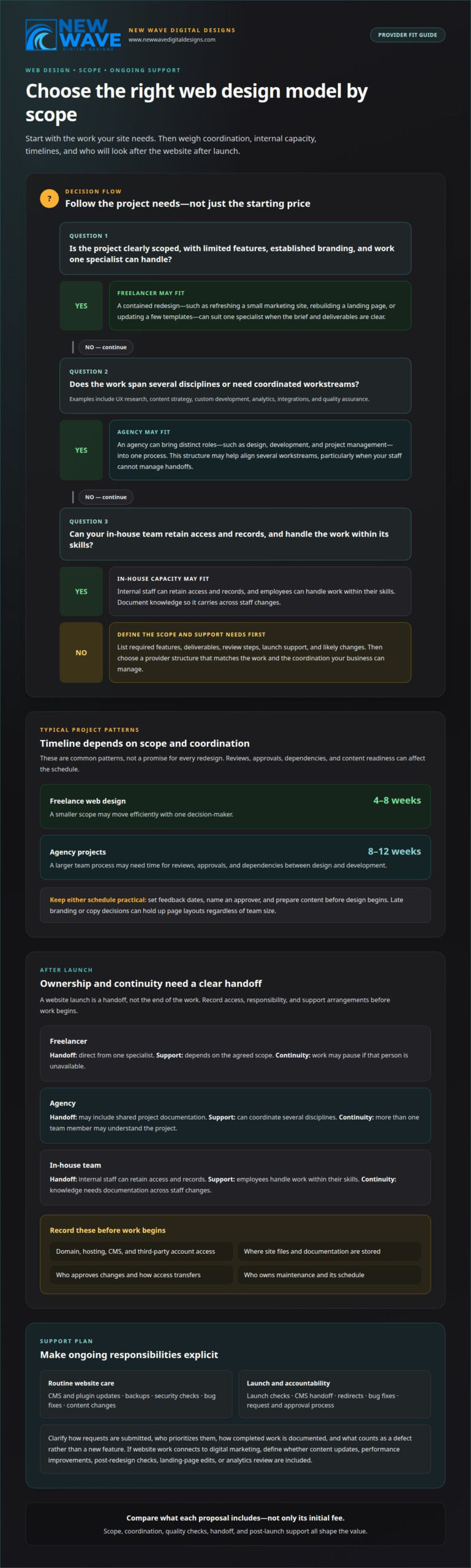
| Option | Ownership and handoff | Maintenance and support | Continuity |
|---|---|---|---|
| Freelancer | Direct handoff from one specialist | Support depends on the agreed scope | Work may pause if that person is unavailable |
| Agency | May include shared project documentation | Can coordinate several disciplines | More than one team member may understand the project |
| In-house team | Internal staff can retain access and records | Employees handle work within their skills | Knowledge needs to be documented across staff changes |
Set a clear owner and schedule for maintenance. A practical plan assigns responsibility for CMS and plugin updates, backups, security checks, bug fixes, and content changes. A written record also helps prevent missed renewals or overlooked access details.
Ongoing support can connect website work with digital marketing. A business focused on organic search may need content updates, performance improvements, and checks after a page redesign. A campaign may also call for landing-page edits and analytics review. Define which tasks are included, who approves changes, and how technical updates support marketing priorities.
Continuity matters when an issue emerges months after launch. A freelancer may become unavailable, while an agency can support continuity with shared documentation, several people familiar with the project, and a support process. Neither model replaces a clear record of decisions, credentials, and completed work.
Start accountability with a written post-launch process. Specify how requests are submitted, who prioritizes them, how completed work is documented, and what counts as a defect rather than a new feature. Include launch checks, CMS handoff, redirects, and bug fixes in the project plan. For the freelancer vs agency for web design decision, choose the model that matches your skills and support needs, then define ownership, maintenance, and accountability before launch.
Can a freelance web designer handle a full website redesign?
Yes, if one specialist can handle the defined scope. A redesign involving several disciplines or extensive coordination may need a different structure.
Freelancer Fit for Defined Projects
A freelancer may suit a contained redesign, such as refreshing a small marketing site, rebuilding a landing page, or updating a few templates. The strongest fit has a clear brief, limited features, and established branding to guide the work. One specialist can then take responsibility for the agreed deliverables without coordinating a larger team.
For example, a business updating its homepage and service pages can set priorities, provide approved copy, and agree on which pages are included. If the project expands to include UX research, content strategy, custom development, and analytics, one person may not cover every discipline. The right choice depends on scope, internal support, and how much coordination the business can manage.
Team Structure and Project Process
A freelancer typically provides a direct working relationship: the person discussing the design may also build it. For a focused project, this can make feedback and decisions more straightforward. An agency can bring distinct roles, such as design, development, and project management, into one process. That structure may help align several workstreams.
Map the deliverables before choosing a provider for a redesign. A visual refresh may focus on layout, branding, and responsive design. A broader rebuild may also involve content structure, integrations, quality assurance, and launch coordination. A freelancer can lead the first scope; an agency’s combined roles may suit the second, especially if your staff cannot manage handoffs.
Project budgets reflect differences in scope and team structure. A freelancer’s proposal may cover fewer deliverables, while an agency’s may include more roles and coordination. Compare the work included, not just the total: templates, content migration, integrations, testing, and launch tasks can all affect the proposal. A shorter deadline can also change the project plan and budget.
Agency and Freelancer Project Timelines
Freelance web design projects typically take 4-8 weeks, while most agency projects take 8-12 weeks. These timelines reflect common project patterns, not a promise for every redesign. A smaller scope may move efficiently with one decision-maker; a larger team process may require time for reviews, approvals, and dependencies between design and development.
Keep the schedule practical by setting feedback dates, naming an approver, and preparing content before design begins. For instance, late branding or copy decisions can hold up page layouts regardless of team size. A clear brief and available content give either structure a steadier path to launch. To shape the project scope, outline your website redesign needs before work begins.
Is a freelancer cheaper than a web design agency?
A freelancer often has lower overhead, which may mean a lower initial proposal. An agency’s fee can cover coordinated roles and project management. Actual costs depend on scope, required skills, and how much coordination your team can handle.
For a business in its first few months with tight cash flow, a broad agency engagement may not be the right fit. A freelancer can suit a contained project with clear deliverables, such as updating a landing page or creating a small marketing site. For complex work, an agency may bring strategy, UX, UI, development, quality assurance, and support together. Those capabilities can be worth the investment when sourcing and coordinating separate specialists would otherwise fall to your team.
Compare proposals by matching each deliverable to the person responsible for it. A redesign may include discovery, page layouts, content structure, development, integrations, testing, and launch. One proposal might cover design and development; another may also include project coordination and post-launch support. The lowest initial fee may not cover the same work. Compare scope, exclusions, revision rules, and responsibilities before assessing value.
Use these questions to clarify the difference between offers:
- Which pages, templates, and features are included in the defined scope?
- Who handles strategy, design, development, quality checks, and launch tasks?
- Are content migration, redirects, integrations, and mobile usability testing included?
- What support covers fixes after launch, and what counts as new work?
- Which decisions and materials must your internal team provide?
The answers show where each model places the work. If your staff can supply copy, manage approvals, and coordinate specialists, a freelancer may handle the core build efficiently. If no internal project lead can manage several moving parts, agency coordination may reduce that burden. For example, a project combining a booking system, new page templates, and analytics needs clear ownership across design and technical tasks.
Before signing, ask how changes will be managed. An added integration or page can affect scope, schedule, and workload. Ask the proposal to explain how changes are approved and recorded, who estimates additional work, and how launch readiness is assessed. Choose a freelancer for a focused brief that matches their expertise, or an agency when several capabilities must work together. Compare actual deliverables and coordination, not just the headline fee.
Questions to ask before hiring a website provider
Compare portfolios and references for relevant projects, clear results, and client feedback; the National Center for Biotechnology Information (NCBI) notes that positive feedback can help freelancers attract work. Put scope, responsibilities, revisions, ownership, launch support, and post-launch arrangements in the contract.
Freelancers and Agencies for Startups
A startup with limited cash flow may prefer a freelancer for a tightly scoped first website. In its early months, a business may need a small marketing site before investing in broader strategy or campaign support. An agency may suit a startup whose launch depends on several capabilities working together, such as UX, development, and quality assurance.
Decide what the first site must accomplish: explain the offer, capture qualified leads, or support online sales. Separate essential features from later improvements. For example, a startup could launch with a focused set of pages and add a client portal later. A defined scope helps match the provider’s structure to immediate needs.
Strategy and Technical Requirements
Ask how the provider will connect site structure to business goals. A lead-generation site needs clear service pages and conversion paths; an online store needs product, checkout, and payment flows. For a custom project, identify required integrations, analytics, content updates, and technical testing before design begins.
A redesign also affects search visibility and usability. Ask how existing rankings and redirects will be reviewed, whether the site will connect to Google Search Console, and how mobile usability will be tested before launch. Look for an explanation of specific steps, not just a promise to build a competitive website.
Portfolio and Reference Evaluation
Review examples that resemble your project in scale, function, or industry. A polished brochure site doesn’t demonstrate the same capabilities as an e-commerce build with payment flows. Compare navigation, mobile layouts, content hierarchy, and visible features, then ask what role the freelancer or agency played in each example.
References and client feedback add context to a portfolio. Look for comments on communication, decision-making, and delivery, then compare those themes across providers. Ask how the team handled a scope change or launch issue. A specific account of the process is more useful than a broad claim of satisfaction.
Before signing, ensure the contract covers scope, roles, revision rules, quality assurance, launch support, CMS handoff, file ownership, and post-launch arrangements. For a redesign, include redirects and responsibility for reviewing existing search rankings. Define how requested changes are handled, so an added feature doesn’t quietly become part of the original scope.
Compare options against your business needs over the next two years. Will the site need e-commerce, booking, a client portal, or regular content updates? If you need ongoing support, include that work in the proposal. A site that’s hard to edit or fails to generate leads months after launch may reflect missing requirements, not just a design problem.
Agency, freelancer, and in-house hiring considerations
Hiring a freelancer, agency, or in-house specialist changes who owns decisions and delivery. A freelancer offers a direct relationship with the person doing the work; an agency coordinates different roles; an employee joins the internal team. Each model needs a clear scope, decision-making authority, and continuity plan.
The main risk of relying on a freelancer is that project knowledge and availability rest with one person. An agency can spread knowledge across a team, but additional handoffs may complicate communication. Reduce either risk with a written scope, shared documentation, defined approvals, and clear ownership of site accounts and files.
A freelancer may fit a focused assignment when your business already has a manager, copywriter, or developer to support the work. For example, an internal marketing lead can provide brand direction and approve page designs while a specialist handles implementation. This keeps responsibilities distinct without adding a permanent role for a contained project.
An agency may fit when strategy, design, development, and quality checks must work together. A project manager can coordinate these contributions while your business retains a clear point of contact. This structure helps when no internal manager can align several specialists or when the work exceeds one person’s expertise.
In-house hiring offers closer day-to-day collaboration and accumulated knowledge of the company’s brand and workflow. It also requires the business to manage recruitment, onboarding, and ongoing responsibilities. In the United States, finding and hiring a senior designer takes an average of 40-60 days, and a newly hired designer usually takes 3 months to fully understand a company’s product, brand, and workflow.
Consider whether the need is ongoing before adding an employee. A freelancer can fill a defined skill gap, while an agency can coordinate a broader project without adding a permanent role. Freelancers may also work with agencies when a project needs a specialist. For example, an agency may bring in a freelance designer for a focused task.
Reduce hiring risk by assigning one decision-maker, documenting deliverables, and defining how changes are approved. Include access transfer and project documentation in the handoff plan. These steps help another person continue the work if an employee leaves, a freelancer becomes unavailable, or an agency team changes.
Choose in-house hiring for sustained internal work, a freelancer for a defined specialist need, and an agency when several disciplines need coordination. To map the right web design support to your project, discuss your website design needs.
New Wave Digital Designs
New Wave Digital Designs helps businesses turn website goals into a clear design and support plan. If you’re weighing a freelancer against an agency, consider your platform, project scope, and ongoing needs. The team designs websites for Shopify, WordPress, and Squarespace, and provides website maintenance for businesses that need support after launch.
New Wave Digital Designs is a natural fit when you want a coordinated partner to shape a new website, redesign, or ongoing upkeep around your business. Share your goals, required features, and support priorities to start a focused conversation. Contact New Wave Digital Designs to discuss your website project.
Shape the next stage of your website
The freelancer-versus-agency choice for web design is also a decision about how you want to work. Consider the role you need from a partner as your business evolves: a specialist for a defined task, a coordinated team for broader needs, or internal expertise for ongoing work. The right fit should clarify decisions and keep your website aligned with your business direction.
Before moving forward, write down the outcome you want your website to support and the responsibilities you want to share. This gives your first conversation a useful starting point, whether you’re planning a new build, refining an existing site, or arranging continued care. New Wave Digital Designs can help turn those priorities into a considered plan for your website.
Contact New Wave Digital Designs to discuss your next step and give your website a thoughtful foundation for what comes next.
Frequently Asked Questions
How Much Does It Cost To Hire a Web Design Agency?
Agency project costs depend on scope and required expertise, so compare detailed proposals rather than assuming a standard fee. A site with custom integrations, content migration, and multiple templates requires different work from a simple redesign. Ask each agency to separate design, development, testing, and launch tasks. This breakdown shows what the estimate covers and helps identify missing deliverables before you agree to the project.
So, Which Is Right for You?
The right choice depends on how much coordination your project needs and who can manage it internally. If one specialist can deliver the work and your team can provide content and approvals, a freelancer may fit. If several disciplines must collaborate, consider an agency. For example, a redesign involving new user journeys, integrations, and analytics needs clear ownership across each workstream.
So, Who Should You Choose?
Choose a person or team whose working model suits your decision-making style. A freelancer gives you a direct relationship with the specialist doing the work. An agency typically organizes work across roles, which can suit a project with connected tasks. In-house hiring fits ongoing needs that call for close daily collaboration. Before choosing, decide who will approve decisions, supply content, and manage feedback.
The Outsourcing Problem: Who Is Actually Doing the Work?
Ask who will lead the project and perform each major task. At an agency, the person presenting the proposal may not be the designer or developer assigned to delivery. A freelancer may handle several roles or bring in collaborators. Request a role-by-role outline covering communication, design approval, technical decisions, and launch coordination, so responsibilities remain clear throughout the engagement.
When should a startup choose an agency instead of a freelancer?
A startup should consider an agency when its launch depends on several capabilities working together, such as user experience, design, development, and quality assurance. This can help when founders lack the time or internal expertise to coordinate separate contributors. A freelancer may suit a defined first site if the startup already has someone managing content, priorities, and approvals.
What are the pros and cons of hiring a freelance web designer versus a web design agency?
A freelancer can offer direct communication and a focused working relationship, but project knowledge may depend on one person. An agency can coordinate varied expertise, though its process may involve more people and handoffs. Consider how your team prefers to make decisions. If you need one point of contact, define that role in either arrangement and agree how updates, approvals, and changes will be communicated.
How much does freelance web design cost compared with agency web design in the US?
Freelancer and agency costs vary with scope, capabilities, and included work, so compare equivalent deliverables rather than labels. One proposal may cover design alone, while another includes development, content migration, testing, or launch assistance. Create a shared list of required pages, features, and responsibilities, then compare each proposal against it. This shows whether a lower estimate reflects a smaller scope or a different approach.
How do freelancer and agency web design project timelines compare?
Freelance projects typically take 4-8 weeks, while agency projects commonly take 8-12 weeks. The schedule also depends on how quickly content, approvals, and decisions are ready. A freelancer may move between tasks directly, while an agency may schedule reviews across roles. Set feedback dates and identify one approver early; those steps help prevent waiting between design, development, and launch.