Graphic Design for Digital Marketing: 2026 Visual Strategy

What if your ads aren’t being ignored because of the offer, but because the visuals aren’t giving people a reason to stop? Graphic design for digital marketing is more than decoration. It helps direct attention, make messages easier to understand, and guide people toward a next step.

Low engagement on social ads, high website bounce rates, and an inconsistent brand presence can point to a disconnect between what your business promises and what people see. Strategic design helps bring those experiences into alignment, creating a recognizable path from first impression to action. It can also support a custom website design project and complement organic SEO by making pages clearer and more consistent.

In this guide, you’ll learn how to connect design choices to campaign goals, decide which visual assets to prioritize, and evaluate a professional design partner. We’ll cover practical principles for building a cohesive visual strategy, from hierarchy and brand consistency to the role of human creative direction alongside AI tools. The goal is a more useful, recognizable brand experience, not simply more visual noise.

Key Takeaways

  • Use graphic design for digital marketing to connect visual choices with campaign goals, audience needs, and desired actions.
  • Apply color, typography, and visual hierarchy consistently so people can recognize your brand and follow your message.
  • Use custom, brand-aligned design when your business needs a distinctive identity across multiple channels.
  • Prioritize the assets your marketing actually uses, including responsive visuals for websites, e-commerce, and advertising.
  • Review visual assets as your business evolves, checking that your website and marketing materials still work together.

The Intersection of Artistry and Analytics: Defining Graphic Design for Digital Marketing

Graphic design for digital marketing is the use of visual elements to communicate a brand’s message and guide people toward actions, such as exploring a service or making a purchase. It puts composition, imagery, color, and typography to work in support of marketing goals. For a foundational overview of the discipline’s history and communication role, see Graphic design.

Digital visuals need to work across screens and platforms, adapt to different placements, and support a consistent experience on websites, search results, and ads. Think of this connected system as visual architecture: a deliberate structure that gives a digital presence clarity and direction. Design makes a brand’s promise easier to understand, while marketing defines the audience, purpose, and outcomes each asset should support.

Beyond Aesthetics: The Functional Role of Visuals

Strong design does more than attract attention. It helps guide a visitor through a marketing funnel by making each next step clear: an ad introduces an offer, a landing page explains it, and a call to action invites a response. Review each element by asking whether it clarifies the message, helps someone act, or distracts from the task.

Visual hierarchy reduces the effort needed to understand a page. Clear headings, readable text, purposeful contrast, and consistent spacing help people find what they came for. Accessibility matters, too. Use legible type, sufficient contrast, meaningful text alternatives for informative images, and layouts that remain usable across devices. These checks help more people engage with the same experience.

The Strategic Advantage of Brand Consistency

A consistent identity connects ads, social content, and a website. Reusing recognizable colors, typography, and image styles helps audiences associate each interaction with the same business, even when the format changes. Consistency doesn’t mean making every asset identical. It means giving each one a shared visual language.

Familiar visual cues can make later interactions easier to recognize and support repeat engagement. A coherent experience can also signal care and reliability. For a custom website design project, consistent visuals help pages feel connected rather than assembled from unrelated parts. Paired with useful content and organic SEO, a clear design can make the website easier to explore and understand.

The Psychology of Visual Persuasion: Why Design Drives Digital Engagement

Before visitors weigh every claim, they form an impression from what they see. A polished, coherent visual experience can signal care and credibility; cluttered or inconsistent creative may give people a reason to hesitate. There’s no universal design formula for earning trust, but thoughtful choices can make a brand feel considered and its message easier to engage with.

That’s where graphic design for digital marketing becomes a practical tool. Color, layout, imagery, and type work together to shape how an offer is perceived and whether someone feels ready to click. As Graphic Design and Digital Marketing explains, the disciplines have different roles but work together to communicate with an audience. Design brings the message into focus; marketing gives it a purpose and a way to assess results.

Professional creative can contribute to the impression of a business, but it does not prove the business will deliver. A well-composed ad, consistent product presentation, and clear website may help communicate that the business takes its work seriously. For digital advertising, give the creative one clear focal point and make the offer easy to read. Treat click-through rate as something to test, not assume: compare creative variations while keeping the audience and offer in view.

Color, Form, and Feeling: The Emotional Blueprint

Color influences tone, but its effect depends on context, audience, and contrast. A restrained palette may support a luxury impression, while vivid accents can add energy or draw attention to an offer. Neither effect is automatic. Check whether the choices fit the brand message and whether text remains readable against them.

White space is an active design choice, not wasted space. It gives important content room and can make a page easier to scan. For social graphics, pattern interruption means using a distinctive visual moment, such as an unexpected crop or strong typographic contrast, to stand out in a crowded feed without losing the connection to the brand.

Typography and the Voice of the Brand

Type communicates personality before a viewer reads the full message. An expressive headline can feel bold; a more structured type system can suggest precision. A strong identity balances personality with clarity.

On mobile, style must serve legibility. Use readable text, clear contrast, and concise headlines that still make sense on a small screen. If people notice an ad but don’t click, check whether the typography makes the offer and next step unmistakable. A professional graphic design partner can help align that visual voice with your brand goals.

Strategic Craftsmanship vs. Commodity Templates: Elevating Your Brand Above the Noise

DIY design tools make it easier to create graphics and assemble a website. The challenge is deciding what can use a familiar layout and what should distinguish your business. If a brand uses the same visual conventions as many others, its specific qualities may be harder to recognize. A polished appearance alone does not give a brand a memorable point of view.

Templates can be a practical starting point, but adapting one to a specific audience, offer, and business goal takes more than changing a logo or color palette. A thoughtful brand identity design connects visual choices to the character of the business. Before committing to a template, check that it can support the content and features you need without adding clutter or workarounds.

The Hidden Costs of “Free” Design Templates

A template may save time at the outset, but its limitations can become apparent as a brand grows. Similar layouts can make recognition harder, while a poor fit may lead to extra elements or plugins that complicate a site. The technical impact depends on the template and how it’s implemented. Review mobile usability, page speed, content flexibility, and how easily your team can make updates before choosing one.

The Artisan’s Edge: Why Customization Matters

Custom design starts with a business objective, then shapes visuals around it. Each element should have a role, whether it clarifies an offer, supports navigation, or helps a campaign stand apart. That’s craftsmanship in practice: creative choices connected to the needs of the business.

Custom assets can be built around enduring brand principles rather than a short-lived trend. They can still be refreshed as the business changes while retaining familiar elements people recognize. For impact-driven organizations, studios like The Ethical Agency demonstrate how tailored design and digital marketing help communicate authentic brand values without relying on cookie-cutter solutions. As part of a custom website design project, this approach can create a more consistent experience and complement organic SEO by helping the brand present itself clearly.

New Wave Digital Designs provides graphic design alongside website design and digital marketing services. Templates and AI tools can assist with execution, but creative direction still determines what belongs in a design and why. Graphic design for digital marketing is most useful when each asset supports a distinct, adaptable brand experience.

Graphic Design for Digital Marketing: 2026 Visual Strategy

The Digital Design Roundup: Essential Visual Assets for a High-Converting Strategy

A useful visual toolkit isn’t a pile of attractive files. It’s a coordinated set of assets, each designed for a specific place in the customer journey. Prioritize the pieces that make your brand recognizable, your offer clear, and the next step easy to find.

  • Logo and identity elements: Establish a recognizable foundation with a logo, supporting color palette, and typography that remain legible across formats.
  • Website graphics: Use hero visuals to introduce a page’s purpose, icons to clarify information, and buttons that look interactive. Treat these as part of the user experience, not decoration.
  • Reusable social templates: Create flexible layouts for announcements, educational posts, and promotions. A shared visual system maintains consistency while leaving room for different messages.
  • Campaign creative: Prepare variations for each offer and placement, keeping the central message and recognizable brand cues consistent. For channels like email marketing, partnering with a specialized team like The Better Creative ensures custom email design and development that render effectively across platforms.
  • Content visuals: Build charts and infographics around useful, original information that readers can understand and share.

Design for the Channel, Not Just the Brand

Each platform asks visuals to do different work. Graphic design for digital marketing should preserve a recognizable identity while adapting the layout, message, and level of detail to the channel.

Google and Bing search ads are primarily text-led, so carry the visual strategy through to the destination page. Match the ad’s promise, make the offer easy to scan, and give visitors a clear next step. For display placements, keep creative focused, use a strong focal point, and check that the offer is understandable at the size it will appear. Test variations instead of assuming one design will earn more clicks.

SEO and content marketing benefit from visuals that clarify information rather than simply repeat the surrounding copy. An infographic can organize research, explain a process, or make a complex idea easier to grasp. Pair it with relevant text and descriptive alternative text so the content remains useful beyond the graphic. Original, valuable visuals may give other publishers a reason to reference your content, though links are never guaranteed.

E-commerce on Shopify or Squarespace calls for product imagery that presents items clearly and consistently. Keep framing, backgrounds, and visual treatment coherent across product pages. Use lifestyle graphics to communicate context without obscuring the product. Check how each asset crops and reads on smaller screens, and balance image quality with page performance. Include these details in custom website design planning rather than treating them as last-minute decoration.

The right mix depends on your goals, channels, and audience. For a coordinated set of brand-aligned assets, explore professional graphic design services.

Forging a Visionary Future: Integrating Professional Design into Your Marketing Ecosystem

A cohesive visual presence doesn’t come from a single logo or campaign. It develops as brand touchpoints are aligned and refined in response to changes in the business, audience, and marketing goals. Design works best as an ongoing part of how a business communicates and supports customer action.

As a business grows, its visual identity may need to express new offerings, campaigns, or channels. Periodic design reviews can uncover practical opportunities for a refresh. Check whether your logo and typography remain legible, campaign assets feel consistent, and website graphics still support current content and user needs.

Let Visual Identity Evolve with the Business

A refresh doesn’t have to mean starting over. Preserve familiar brand cues while refining elements that no longer serve the message, such as outdated layouts or imagery that feels disconnected from the business. A coherent design can complement organic SEO by helping people explore useful content. Design alone doesn’t guarantee search visibility, but it can improve the experience around that content.

Choose a Digital Architect, Not Just an Executor

A design partner should ask how the work will be used, who it needs to reach, and what action it should support. Look for a process that considers visual craft alongside marketing goals, accessibility, responsive use, and consistency across channels. Ask how feedback is handled, how existing brand elements are assessed, and how updates will be approached as priorities change.

A partner with connected expertise can help align graphic design with a custom website design project and related marketing efforts. New Wave Digital Designs offers graphic design, Shopify, WordPress, and Squarespace website design, Google Ads and Bing Ads management, and organic SEO. These services can help bring the website and marketing touchpoints into a more consistent brand experience.

Build for what’s next. Graphic design for digital marketing can give your brand a clear, adaptable visual foundation that reflects your purpose today and leaves room for change. If you’re ready to explore a more cohesive direction, contact New Wave Digital Designs to discuss your brand’s visual needs.

Shape the Next Chapter of Your Brand

Graphic design for digital marketing is most useful when every visual choice serves a purpose: expressing your brand clearly, guiding people through a digital experience, and supporting your marketing goals. A cohesive identity helps connect separate ads, website pages, and content into a recognizable whole. Because businesses evolve, visual systems also need thoughtful review and refinement.

The right partner brings creative work together with strategy. New Wave Digital Designs works across Shopify, WordPress, and Squarespace, and offers graphic design, organic SEO, and paid search management. Its services can help businesses create a more consistent experience across their websites and marketing materials.

Talk with New Wave Digital Designs about graphic design for digital marketing and start with a clearer visual foundation for your brand.

Frequently Asked Questions

What is the difference between graphic design and digital marketing design?

Graphic design is the broader practice of shaping visual communication, while digital marketing design applies those skills to online marketing goals. Graphic design for digital marketing might include ad creative, landing-page graphics, or visuals for content, each tailored to its audience and purpose. Marketing design considers where people will see an asset, what they need to understand, and what action the visual should support.

How does professional graphic design improve my SEO rankings?

Professional graphic design doesn’t guarantee higher search rankings, but it can strengthen the experience around organic content. Clear layouts help visitors read and navigate pages, while relevant visuals can make information easier to understand. Descriptive alternative text can communicate an image’s content to people using assistive technology and provide search engines with context. Pair thoughtful design with useful content, sound site structure, and technical SEO.

Why should I invest in custom graphics instead of using stock photos?

Custom graphics let you express your brand’s specific message, style, and subject matter instead of relying on imagery that may also appear elsewhere. Stock photos can be practical when they fit the brief, but they may feel generic if they don’t align with your identity or audience. Choose visuals based on relevance and authenticity, not simply whether they’re custom. A consistent visual language can make your website and campaigns feel more recognizably yours.

What are the most important visual elements for a high-converting landing page?

Can good graphic design actually lower my Google Ads costs?

Good design may support a more relevant, coherent experience between an ad and its landing page, but it can’t guarantee lower Google Ads costs. Ad costs depend on factors beyond design, including campaign settings, competition, and how well the ad meets its goals. Keep the ad’s message and landing-page content aligned, then assess campaign results. Treat design variations as testable creative choices, not as a promise of reduced spending.

How often should a business update its digital visual identity?

Update your visual identity when it no longer reflects your business, audience, or current marketing goals, rather than following an arbitrary schedule. Review it when you introduce new offerings, refresh your website, or notice that visuals have become inconsistent across channels. A focused design audit can identify what still works and what needs refinement. Preserve recognizable brand elements where possible while updating assets that create confusion or feel disconnected.

What visual assets do I need to launch a new Shopify store?

Prepare a legible logo, a consistent color and typography system, clear product imagery, and branded graphics for key store pages. You may also need homepage visuals, collection graphics, icons, and promotional assets that support your launch message. Check that images display cleanly on mobile and product details remain easy to understand. Plan assets around your catalog and store structure, then review how each visual fits the customer journey.

Is graphic design included in standard website maintenance packages?

Not necessarily. Website maintenance generally focuses on keeping a site updated and functional, while graphic design creates or refines visual assets. The scope varies by provider, so confirm whether design work is included, treated as a separate service, or available by request. New Wave Digital Designs offers both website maintenance and graphic design, but don’t assume a maintenance arrangement includes new graphics unless the agreed scope says so.

Small Business Graphic Design Services: Strategic Visual Craftsmanship in 2026

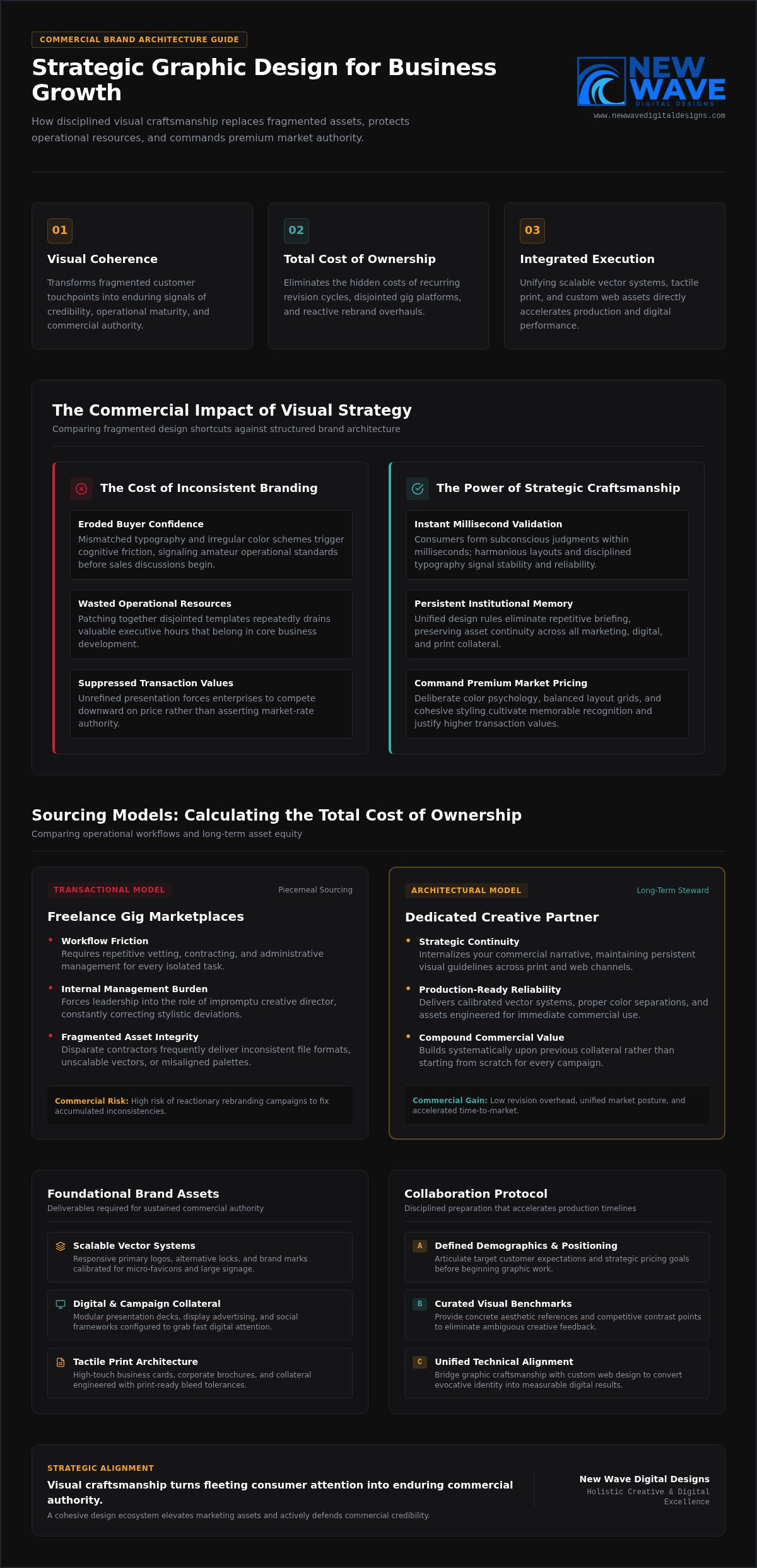
What if the visual shortcuts meant to protect your budget are quietly eroding your commercial credibility? If you have spent exhaustive hours vetting unreliable gig freelancers, wrestling with rigid templates, and juggling disjointed visuals across your web platforms and print collateral, you know the frustration intimately. Dedicated small business graphic design services eliminate this friction, replacing fragmented tasks with an intentional visual foundation. Strategic visual architecture builds compound commercial trust that piecemeal graphics simply cannot replicate.

Finding the right creative partner often feels like an impossible dilemma. Which service model delivers refined, production-ready assets without bloated agency retainers or erratic freelancer quality? Discover how dedicated small business graphic design services transform brand identity, elevate marketing assets, and drive commercial growth. Ahead, we evaluate modern collaboration models, establish predictable creative workflows, and demonstrate how meticulous visual craftsmanship turns fleeting consumer attention into lasting market authority.

Key Takeaways

  • Visual coherence transforms everyday customer touchpoints into enduring expressions of credibility, distinction, and commercial authority.
  • Selecting the right small business graphic design services requires weighing the hidden revision costs of gig marketplaces against the holistic value of a dedicated creative partner.
  • Foundational brand architecture, spanning scalable vector assets to tactile print collateral, secures the consistency needed to command premium market positioning.
  • Disciplined creative preparation, grounded in clear demographic objectives and curated visual benchmarks, accelerates production schedules and sharpens design precision.
  • Unifying graphic craftsmanship with custom web design bridges the gap between evocative brand identity and measurable digital performance.

Why Intentional Graphic Design Drives Small Business Growth

Visual aesthetics do far more than decorate an enterprise; they establish its commercial architecture. When prospective clients discover your business, their initial visual impressions dictate whether they perceive you as a fleeting startup or an enduring industry authority. At its foundational core, Graphic design functions as strategic visual communication, balancing deliberate typography, psychological color theory, and spatial harmony to guide consumer perception. Partnering with dedicated small business graphic design services shifts visual creation from an ad-hoc expense into a compounding commercial asset that actively lifts conversion rates across every customer interaction.

The True Cost of Inconsistent Visual Branding

Fragmented design aesthetics silently drain operational capital. When promotional collateral, digital banners, and presentation decks lack unified styling, prospective buyers experience cognitive friction. This lack of alignment chips away at market authority, forcing your sales team to overcome skepticism that polished design could have dispelled instantly. Businesses caught in a cycle of rushed, piecemeal graphics frequently find themselves spending twice as much on reactionary rebranding campaigns to fix previous mistakes. Cluttered visuals signal amateur operational standards, devaluing high-quality products or services before conversations even begin.

  • Eroded buyer confidence: Mismatched typefaces and irregular color palettes make your company appear disorganized, raising doubts about service delivery.
  • Wasted operational resources: Patching together disparate templates repeatedly drains executive hours that belong in business development.
  • Suppressed transaction values: Unrefined visual presentation forces businesses to compete on price rather than commanding market-rate authority.

Building Instant Credibility in Crowded Digital Markets

Disciplined visual craftsmanship provides an immediate competitive advantage. In high-velocity digital channels, consumers make subconscious judgments about brand credibility within milliseconds. A harmonious visual identity, built on balanced layouts and intentional color psychology, signals operational maturity and validates premium pricing models. When your typography, brand marks, and layout grids remain cohesive across custom web properties, print collateral, and advertising, you cultivate memorable brand recognition. Strategic small business graphic design services ensure this aesthetic continuity, turning fleeting consumer glances into sustained commercial trust and measurable customer loyalty.

Evaluating Small Business Graphic Design Services: Sourcing Models Compared

Every commercial enterprise requires visual assets, but the path chosen to acquire them dictates operational efficiency and long-term brand equity. Growing companies generally weigh three primary avenues: transactional gig platforms, dedicated internal hires, or collaborative boutique agencies. Each model presents distinct trade-offs in speed, creative control, and financial commitment. Choosing the right small business graphic design services requires calculating the total cost of ownership, accounting for administrative onboarding hours, recurring revision cycles, and strategic cohesion.

Freelance Marketplaces vs. Dedicated Creative Partners

Open talent platforms offer fast fulfillment for isolated tasks, yet they introduce severe brand fragmentation. Sourcing disparate contractors for individual deliverables forces your leadership team to act as an impromptu creative director. Every new freelancer requires fresh brand briefings, stylistic correction, and file validation. In contrast, a dedicated design partner acts as an architectural steward. They internalize your commercial narrative, preserve institutional design memory, and deliver unified assets that build upon previous collateral rather than starting from scratch.

  • Workflow friction: Decentralized gig networks demand repetitive vetting and communication management for every asset requested.
  • Strategic continuity: Long-term creative partners maintain persistent visual guidelines across print collateral, digital campaigns, and website touchpoints.
  • Asset integrity: Experienced partners supply production-ready vector files, print separations, and digital formats without tedious revision loops.

In-House Hires vs. Agency Collaboration

Hiring a full-time in-house designer provides dedicated focus, but it carries heavy overhead. Small businesses assume recurring payroll liabilities, benefits, software licensing fees, and ongoing hardware investments. Solo internal hires also face inevitable bandwidth caps and skill specialization limits; a specialist in print collateral may lack advanced experience in digital marketing or layout engineering. Engaging a boutique agency bridges this capability gap entirely, offering multidisciplinary creative support that scales naturally alongside seasonal demand.

Boutique agency partnerships blend specialized creative artistry with practical commercial agility. Rather than carrying fixed internal overhead during slower business cycles, you access seasoned craftsmanship on demand. Exploring dedicated collaborative graphic design partnerships enables your team to deploy sophisticated visual assets while keeping internal resources focused entirely on core business operations.

Core Graphic Design Assets Every Thriving Enterprise Requires

Every commercial visual system rests upon interconnected asset pillars. Isolated graphics create fragmented customer journeys, but a unified visual library empowers your enterprise to present a cohesive presence across every channel. Investing in targeted small business graphic design services ensures you build an asset foundation that commands market authority. Grounding your organization in the principles of professional graphic design transforms disparate files into a synchronized toolkit engineered for commercial growth.

Visual Identity Systems and Vector Logo Suites

A resilient identity system extends far past a single standalone emblem. High-performance brands deploy responsive logo suites containing primary lockups, secondary marks, and streamlined favicons tailored for diverse digital viewports. Comprehensive brand guidelines codify exact color specifications, typographic hierarchies, and spatial clear zones. Scalable vector artwork preserves crisp visual clarity whether rendered on a pocket-sized mobile screen or expanded across large-format signage. Investing in professional brand identity design services ensures these foundational elements cohere into a strategic visual system that endures well beyond initial launch.

  • Universal mark collections: Horizontal layouts, stacked badges, and simplified icons suited for versatile display scenarios.
  • Definitive design standards: Exact color codes for digital hex and physical print production paired with strict font hierarchies.
  • Production-grade vector masters: Mathematical line files that eliminate pixel degradation across any screen dimension.

Tangible Print Collateral and Environmental Graphics

Tactile print mediums command exceptional cognitive authority in a screen-saturated commercial environment. Holding a heavyweight, custom-finished collateral piece creates a lasting sensory impression that ephemeral pixels cannot replicate. Premium business cards, bound editorial presentation decks, branded product packaging, and trade show backdrops anchor your business in the physical world. For organizations looking to make a dynamic statement at exhibitions or retail spaces, partnering with innovators like Softmotion for large-format lenticular printing and immersive visual installations creates an unforgettable physical presence. Each physical touchpoint reinforces your brand integrity through intentional material textures, precise dye-cuts, and meticulous typographic execution.

Digital Marketing and Web Visual Assets

Modern commercial acceleration relies heavily on persuasive digital collateral. High-converting display banners for paid advertising require striking visual anchors and deliberate negative space to drive immediate engagement. Custom data infographics and editorial illustrations elevate organic content, turning complex concepts into accessible visual assets that earn industry backlinks. Understanding how graphic design for digital marketing directs attention and guides prospects toward action is essential for maximizing campaign performance. Integrating these assets directly into custom web design architecture guarantees that your digital storefront delivers an uninterrupted, high-trust user journey from initial search click to final commercial transaction.

Small Business Graphic Design Services: Strategic Visual Craftsmanship in 2026

How to Prepare for a Seamless Graphic Design Collaboration

Exceptional design outcomes rely on structured preparation. When creative partnerships flounder, ambiguous expectations and subjective critique are almost always the cause. Approaching professional small business graphic design services with a well-defined strategic blueprint accelerates turnaround times, protects operational focus, and ensures your visual collateral hits precise commercial targets. By establishing clear project guardrails before the first sketch begins, you empower your creative team to build assets that drive authentic market distinction.

Crafting a Crystal-Clear Creative Brief

A strategic brief functions as an architectural blueprint for visual storytelling. Document your primary audience demographics, psychological motivations, and explicit commercial objectives before commissioning new assets. Note precise technical parameters, such as pixel dimensions for digital banners or bleed specifications for physical printing. Include direct competitors alongside aspirational brand benchmarks; contrasting what you admire with what you want to avoid establishes clear aesthetic boundaries right from day one.

  • Target audience profile: Clarify who the asset speaks to, outlining their specific priorities, pain points, and decision triggers.
  • Functional technical parameters: Specify exact deliverable formats, required color profiles, and resolution standards upfront.
  • Sector benchmarks: Provide curated swipe files highlighting visual textures, compositions, and tonal approaches that reflect your vision.

Streamlining Creative Reviews and Asset Sign-Off

Subjective feedback derails productive momentum faster than poor drafts. Comments like “make it pop” offer little actionable direction. Instead, ground your evaluations in functional utility and strategic alignment. Does the typographic hierarchy guide the reader naturally to your primary call to action? Does the visual balance maintain high contrast across both desktop screens and mobile interfaces? Establish a single point of internal contact to synthesize team feedback into consolidated, actionable revision notes.

Disciplined review protocols eliminate chaotic revision loops and keep project delivery on schedule. When your team evaluates visual drafts through an objective lens, every adjustment reinforces your core commercial message. If you want to refine your visual workflow and secure compelling brand collateral, schedule a creative consultation today to discover how an intentional design framework elevates your market presence.

Partnering with New Wave Digital Designs for Holistic Brand Excellence

True commercial distinction requires more than isolated visual assets; it demands a unified creative vision. Many growing businesses find themselves trapped managing disconnected vendors, where graphic designers, web developers, and marketing specialists operate in complete isolation. New Wave Digital Designs dismantles these communication silos through visionary craftsmanship and dedicated creative stewardship. By serving companies nationwide as a boutique creative architect, the agency unites visual identity systems with custom digital architecture, transforming standard small business graphic design services into an engine for long-term commercial performance.

The Synergy of Unified Design and Digital Architecture

Bridging graphic design and technical web development ensures flawless digital execution. When visual assets are crafted with web performance in mind, interface layouts retain their artistic elegance across every responsive screen size. Technical friction disappears because the creative minds shaping your visual assets understand the underlying platforms that host them, whether your enterprise operates on WordPress, Shopify, or Squarespace.

  • Cohesive multi-channel execution: Marketing collateral, print assets, and search advertising graphics share unified art direction.
  • Seamless platform deployment: Visual files are engineered specifically to preserve web speed, structural integrity, and responsive layout fidelity.
  • Integrated digital marketing: Compelling graphic storytelling flows naturally into targeted Google Ads and Bing Ads campaigns to maximize visitor conversions.

A Tailored Collaborative Journey Built for Sustainable Impact

Every business possesses a distinct narrative that generic templates fail to capture. Our collaborative methodology begins by listening intently to your commercial goals, uncovering the emotional resonance behind your brand, and articulating those insights through bespoke visual artistry. You don’t get handed off to an anonymous project manager or rotated through junior freelancers. Instead, you gain an invested creative partner providing continuous visual stewardship as your organization expands its market footprint.

Long-term brand equity forms when strategic design and high-performance digital infrastructure converge. Whether establishing a new market presence or realigning fragmented collateral, choosing dedicated small business graphic design services backed by robust web solutions safeguards your reputation at every customer touchpoint. Connect with New Wave Digital Designs today to establish a refined, cohesive visual presence engineered to turn initial audience engagement into enduring commercial success.

Transforming Visual Craftsmanship into Lasting Commercial Growth

A distinguished visual presence is not a decorative luxury; it is the cornerstone of sustainable commercial authority. Looking beyond generic templates and isolated gig transactions protects your enterprise from the costly erosion of fragmented branding. Dedicated small business graphic design services bridge the vital space between imaginative artistry and measurable business outcomes, establishing visual coherence that commands respect across every print deliverable and digital touchpoint.

Pairing disciplined creative craftsmanship with end-to-end alignment across custom web platforms equips your growing enterprise with a resilient visual architecture. You don’t have to navigate brand evolution alone. Partnering with a dedicated creative steward ensures your visual collateral matures alongside your commercial ambitions. Take the definitive step toward building a brand that captivates audiences and inspires lasting market loyalty: elevate your visual presence with New Wave Digital Designs today, and lead your industry with enduring confidence.

Frequently Asked Questions

What does a comprehensive small business graphic design service include?

A complete suite includes primary and secondary vector logo marks, responsive favicons, brand style guides, print collateral, and digital assets tailored for web platforms and advertising campaigns. Dedicated small business graphic design services unify these assets into an adaptable visual system. This ensures your brand communicates authority consistently across physical packaging, print materials, and custom digital ecosystems.

How do professional design services differ from DIY template builders?

DIY template platforms rely on pre-fabricated layouts that hundreds of competing companies share, resulting in generic visuals that fail to build distinct market equity. Professional design services craft bespoke visual architecture tailored precisely to your commercial narrative and audience psychology. A skilled designer balances spatial harmony, typographic hierarchy, and custom color palettes, ensuring your business projects credible sophistication rather than looking like an interchangeable startup.

What file formats should a small business expect upon project completion?

You should expect a structured asset archive containing vector master files alongside high-resolution raster exports. Vector formats like AI, EPS, and SVG allow infinite scaling for large-scale signage or responsive web headers without pixelation. Raster deliverables should include high-resolution PNGs with transparent backgrounds and compressed JPEGs optimized for screens, alongside print-ready PDFs configured with CMYK color profiles and bleed margins so specialized print providers like ideasfactory can produce custom adhesive labels and packaging materials without visual flaws.

How long does a typical small business branding and design project take?

Most comprehensive identity and collateral projects take between three to six weeks from initial discovery to final asset delivery. This timeline accommodates thorough brand research, conceptual drafting, typography pairing, and disciplined revision rounds. Rushing the process often yields superficial visuals that require premature redesigns. A methodical pace allows your creative partner to stress-test assets across multiple digital screens and physical print mediums.

Why is consistent graphic design critical for digital marketing performance?

Visual continuity directly impacts marketing conversion rates by removing cognitive friction across the customer journey. When promotional ads, landing pages, and custom website interfaces share unified typography, colors, and spatial balance, prospects feel immediate commercial trust. A well-executed graphic design for digital marketing strategy aligns promotional campaign visuals with your core digital platforms, lifting engagement rates and turning casual ad clicks into qualified inquiries. Tailored small business graphic design services align promotional campaign visuals with your core digital platforms, lifting engagement rates and turning casual ad clicks into qualified inquiries.

How should a small business budget for ongoing graphic design needs?

Businesses should plan their design budget around strategic commercial milestones and seasonal campaigns rather than reactive, piecemeal purchases. Aligning design expenditures with quarterly marketing initiatives and scheduled website updates creates predictable operational costs. Partnering with a dedicated creative agency on an ongoing basis often proves far more economical than paying erratic freelancer invoices or absorbing full-time payroll, benefits, and design software subscriptions.